

Relationship communication tools come in several formats — structured workbooks, research-backed guides, and skills-based programs — and the right choice depends on how much time and effort a couple can commit. The Seven Principles for Making Marriage Work earns my best overall pick for its decades of clinical research behind every exercise, while The CBT Couples Toolbox stands out for couples who want a large library of practical exercises rather than theory. For couples short on time, Communication Skills for Couples Made Simple distills core skills into ten minutes a day. The main tradeoff in this category is depth versus accessibility: the most rigorous tools demand real commitment, while the quickest ones may only scratch the surface. Keep reading for the full breakdown of all nine options and which one fits your relationship.

Get gifts for the two of you delivered free — and shop member deals
- Fast, free delivery on millions of items
- Access to Prime Big Deal Days deals on October 6–7
- Prime Video, Amazon Music and more included
Key Takeaways
- Research-backed credentials separated the top of the lineup: The Seven Principles for Making Marriage Work is grounded in 40+ years of Gottman clinical research, while most competitors rely on general therapy principles without citing any evidence base.
- Time commitment varied more than any other factor — options ranged from 12 days at 20 minutes (Couples Communication Workbook) to open-ended study (Nonviolent Communication), and this is the single best predictor of whether a couple will finish the program.
- Exercise-heavy workbooks (The CBT Couples Toolbox, 12-Week Relationship Therapy Workbook) consistently offered more hands-on practice than reading-focused books, making them better for couples who learn by doing rather than reading.
- Several mid-priced workbooks overlapped heavily in content; couples should choose based on structure and length rather than assuming a higher price means better material.
- Nonviolent Communication is the only pick that applies beyond romantic relationships — useful for couples whose communication problems extend into family and workplace dynamics.
| The Seven Principles for Making Marriage Work |  | Best Overall | Format: Paperback, Kindle, audiobook | Author: John Gottman, PhD, with Nan Silver | Approach: Research-based marriage principles | VIEW LATEST PRICE | See Our Full Breakdown |
| The CBT Couples Toolbox | 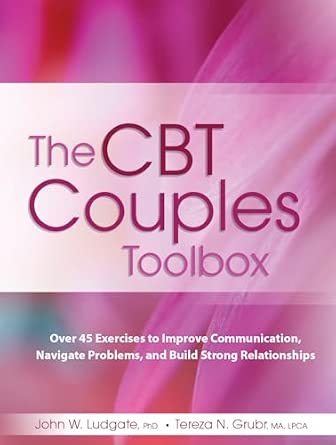 | Best for Hands-On Problem Solvers | Format: Paperback | Exercise count: 45+ CBT-based exercises | Approach: Cognitive-behavioral therapy techniques | VIEW LATEST PRICE | See Our Full Breakdown |
| Love More, Fight Less | 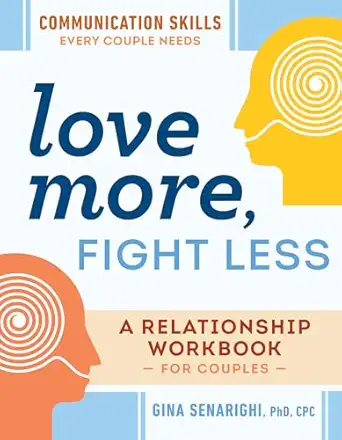 | Best Value for Everyday Communication | Format: Paperback, Kindle | Type: Interactive couple’s workbook | Approach: Practical communication exercises | VIEW LATEST PRICE | See Our Full Breakdown |
| 12-Week Relationship Therapy Workbook for Couples | 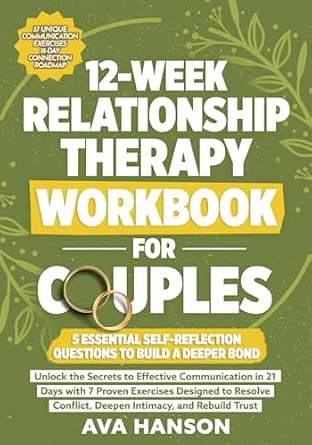 | Best Structured Program | Format: Paperback workbook | Program length: 12 weeks | Exercise count: 7 core exercises | VIEW LATEST PRICE | See Our Full Breakdown |
| Communication Skills for Couples Made Simple |  | Best for Busy Couples | Format: Paperback, Kindle | Program length: 7 steps, 10 minutes per day | Approach: Sequential daily practice workbook | VIEW LATEST PRICE | See Our Full Breakdown |
| 8-Week Couples Therapy Workbook: Essential Strategies to Connect, Improve Communication, and Strengthen Your Relationship |  | Best Structured Program | Format: Spiral-bound workbook | Program Length: 8 weeks | Focus: Communication, connection, relationship strengthening | VIEW LATEST PRICE | See Our Full Breakdown |
| The Couples Communication Handbook: The Skills You Never Learned for the Marriage You Always Wanted |  | Best for Skill Foundations | Format: Book (handbook style) | Focus: Communication skills for marriage | Structure: Skills-based guidance, not a dated program | VIEW LATEST PRICE | See Our Full Breakdown |
| Nonviolent Communication: A Language of Life |  | Best Classic / Best Long-Term Method | Format: Book | Focus: Compassionate communication framework | Core Method: Observations, feelings, needs, requests | VIEW LATEST PRICE | See Our Full Breakdown |
| Couples Communication Workbook: 20 Minutes a Day for 12 Days to Improve Listening, Resolve Conflicts, and Strengthen Your Relationship |  | Best Low-Commitment Starter | Format: Workbook | Program Length: 12 days | Daily Time Required: 20 minutes | VIEW LATEST PRICE | See Our Full Breakdown |
| relationship communication tool | Format | Structure | Approach | Best use |
|---|---|---|---|---|
| The Seven Principles for Makin | Paperback, Kindle, audiobook | Seven core principles with illustrative case studies | Research-based marriage principles | Foundational reading for married or committed couples |
| The CBT Couples Toolbox | Paperback | Modular chapters by relationship skill area | Cognitive-behavioral therapy techniques | Targeted practice on specific relationship problems |
| Love More | Paperback, Kindle | Standalone exercises and prompts | Practical communication exercises | Casual at-home practice for established couples |
| 12-Week Relationship Therapy W | Paperback workbook | — | Structured, therapy-inspired progression | Couples in recovery mode wanting a fixed schedule |
| Communication Skills for Coupl | Paperback, Kindle | Seven progressive steps | Sequential daily practice workbook | Busy couples building a daily communication habit |
| 8-Week Couples Therapy Workboo | Spiral-bound workbook | Guided weekly exercises | — | — |
| The Couples Communication Hand | Book (handbook style) | Skills-based guidance, not a dated program | — | — |
| Nonviolent Communication: A La | Book | Concept-driven with examples and exercises | — | — |
| Couples Communication Workbook | Workbook | Daily guided exercises | — | — |
More Details on Our Top Picks
The Seven Principles for Making Marriage Work
This pick makes the most sense for couples who want evidence-based guidance rather than a list of exercises. Grounded in decades of research from the Gottman Institute, it explains why relationships fail and which habits predict lasting connection — a depth that workbooks like Love More, Fight Less can’t match. The tradeoff is format: this is a book to read and absorb, not a fill-in-the-blank workbook, so couples wanting daily structured practice will need to supplement it. Compared with the CBT Couples Toolbox, it offers stronger theory but fewer ready-to-use worksheets. Still, no other title here combines credibility, clarity, and long-term applicability this well, which is why it earns the top spot.
Pros:- Written by a leading relationship researcher with decades of clinical data
- Explains root causes of conflict, not just surface techniques
- Applicable across marriage stages, from newlyweds to long-term partners
- Widely recommended by therapists as a foundational text
Cons:- Contains few fill-in exercises compared with dedicated workbooks
- Requires sustained reading and self-directed application to see results
Best for: Couples who want research-backed insight into how relationships work before jumping into exercises
Not ideal for: Couples who want a hands-on workbook with daily prompts — this is primarily explanatory reading
- Format:Paperback, Kindle, audiobook
- Author:John Gottman, PhD, with Nan Silver
- Approach:Research-based marriage principles
- Structure:Seven core principles with illustrative case studies
- Exercises:Questionnaires and limited in-book activities
- Best use:Foundational reading for married or committed couples
- Time commitment:Full-book read plus ongoing application
Our verdict“If a couple buys only one book, this is the one — but expect to do the work of translating principles into practice yourself.”
The CBT Couples Toolbox
This option stands out for volume and structure: more than 45 cognitive-behavioral exercises give couples a genuine toolkit to work through specific problems, from recurring arguments to emotional distance. Where The Seven Principles for Making Marriage Work explains the science of relationships, this book flips the ratio toward doing — each exercise targets a recognizable pattern couples can name and interrupt. Compared with the 12-Week Relationship Therapy Workbook, it offers far more flexibility, since pairs can pick exercises à la carte rather than follow a fixed timeline. The tradeoff: less narrative context means couples in crisis may feel they’re treating symptoms without understanding causes, and the clinical tone can read as dry for casual browsing.
Pros:- Over 45 discrete exercises covering communication, conflict, and connection
- CBT grounding gives techniques with a clear psychological rationale
- Modular design lets couples skip to relevant chapters
- Suits both self-help readers and therapists assigning homework
Cons:- Minimal narrative guidance for couples unsure which exercise fits their situation
- Terminology may feel clinical for readers new to therapy concepts
Best for: Couples who like structured, self-directed exercises and want to target specific recurring problems
Not ideal for: Couples wanting a warm, story-driven read — the clinical CBT framing is functional rather than emotional
- Format:Paperback
- Exercise count:45+ CBT-based exercises
- Approach:Cognitive-behavioral therapy techniques
- Structure:Modular chapters by relationship skill area
- Focus areas:Communication, conflict resolution, emotional connection
- Best use:Targeted practice on specific relationship problems
- Time commitment:Flexible; exercise-based rather than sequential
Our verdict“The strongest choice for couples who learn by doing and want a large, flexible exercise library at their fingertips.”
Love More, Fight Less
This workbook earns its place by being approachable and affordable — a low-commitment entry point for couples who know their arguments follow predictable scripts and want practical tools to break them. Compared with the CBT Couples Toolbox, the exercise set here is smaller and less clinical, which is precisely the point: it’s easier to actually finish. The focus on conflict reduction makes it a good middle ground between the theory-heavy Seven Principles and the rigid 12-week programs elsewhere in this roundup. The drawbacks are real, though — couples dealing with deeper trust ruptures will find it too lightweight, and those wanting a step-by-step progression may prefer the Communication Skills for Couples Made Simple program instead.
Pros:- Affordable and widely available in multiple formats
- Exercises are short and easy to complete without a therapist
- Directly targets recurring conflict patterns
- Gentle tone works well for partners wary of ‘therapy’ language
Cons:- Limited depth beyond basic communication drills
- Few supporting resources or explanations of underlying dynamics
Best for: Budget-minded couples who argue in recurring patterns and want quick, practical exercises
Not ideal for: Couples rebuilding after betrayal or serious conflict — the scope is too light for deep repair work
- Format:Paperback, Kindle
- Type:Interactive couple’s workbook
- Approach:Practical communication exercises
- Focus areas:Conflict reduction, understanding, connection
- Structure:Standalone exercises and prompts
- Difficulty:Beginner-friendly
- Best use:Casual at-home practice for established couples
Our verdict“A sensible, low-cost starting point for couples who want fewer fights without enrolling in a full program.”
12-Week Relationship Therapy Workbook for Couples
For couples who flounder without a roadmap, this workbook’s 12-week guided arc is its defining strength. Seven core exercises build from communication basics toward conflict resolution, intimacy, and trust rebuilding — a progression that self-directed books like Love More, Fight Less leave entirely to the reader. Compared with the Communication Skills for Couples Made Simple workbook, this asks for a longer commitment but goes further, explicitly addressing trust repair rather than stopping at listening skills. The tradeoff is rigidity and consistency: it’s a newer title with limited reader feedback, and a 12-week schedule demands genuine dedication from both partners. If one person skips weeks, the structure that makes this book valuable starts to work against it.
Pros:- Clear 12-week progression removes guesswork about what to do when
- Explicitly covers trust rebuilding, not just communication basics
- Seven focused exercises keep the program manageable
- Works well as a companion to couples counseling
Cons:- Requires sustained three-month commitment from both partners
- Limited reader reviews and track record as a newer title
Best for: Committed couples recovering from conflict or trust issues who want a fixed, week-by-week program
Not ideal for: Couples with unpredictable schedules or uneven motivation — the 12-week structure collapses without consistent participation
- Format:Paperback workbook
- Program length:12 weeks
- Exercise count:7 core exercises
- Approach:Structured, therapy-inspired progression
- Focus areas:Communication, conflict, intimacy, trust
- Best use:Couples in recovery mode wanting a fixed schedule
- Commitment level:High — weekly participation from both partners
Our verdict“Choose this if your relationship needs a disciplined, therapist-style program and both partners will show up for twelve weeks.”
Communication Skills for Couples Made Simple
The pitch here is ten minutes a day, and that constraint is the whole product. A seven-step program covers trust, conflict, and active listening in bite-sized sessions designed for couples who can’t or won’t commit to the 12-week arc of the 12-Week Relationship Therapy Workbook. Compared with Love More, Fight Less, the difference is sequencing: rather than standalone exercises, this builds skills step by step, which suits couples who like knowing there’s a path. The obvious tradeoff is depth — ten minutes daily builds a habit more than it transforms a relationship, and couples with entrenched conflict will hit the ceiling fast. There’s also limited review history for this newer title, so buyers are trusting the format over a proven track record.
Pros:- Ten-minute sessions fit into almost any schedule
- Clear 7-step sequence builds skills progressively
- Strong emphasis on active listening and trust fundamentals
- Low intimidation factor for partners reluctant to do relationship work
Cons:- Brief sessions limit depth on serious issues
- Limited reviews and supporting materials as a newer title
Best for: Time-strapped couples who want a low-bar daily habit that fits around jobs, kids, and chaos
Not ideal for: Couples in serious conflict — the short format can’t cover deep trust or resentment work
- Format:Paperback, Kindle
- Program length:7 steps, 10 minutes per day
- Approach:Sequential daily practice workbook
- Focus areas:Active listening, trust, conflict resolution
- Structure:Seven progressive steps
- Best use:Busy couples building a daily communication habit
- Commitment level:Low per session, but daily
Our verdict“The right pick if consistency is your biggest obstacle — just don’t expect a ten-minute habit to resolve years of built-up conflict.”
8-Week Couples Therapy Workbook: Essential Strategies to Connect, Improve Communication, and Strengthen Your Relationship
This workbook earns its spot for having the clearest long-form structure in the roundup: eight weeks of guided exercises that build on each other, which is what separates it from more general reads like The Couples Communication Handbook. The spiral-bound format is a genuinely practical touch — it lies flat while both partners write, a small detail that matters when a workbook is meant to be used, not just read. Compared with the Couples Communication Workbook‘s 12-day sprint, this option trades speed for depth, giving couples time to actually practice new habits between sessions. The tradeoff is real, though: a two-month commitment demands sustained participation from both partners, and if one person is checked out, the structure becomes a source of frustration rather than growth.
Pros:- Structured 8-week program that builds skills progressively rather than dumping information at once
- Spiraral-bound design lies flat for easy paired use during exercises
- Therapy-inspired exercises approximate guided counseling at a fraction of the cost
- Clear pacing helps couples who struggle with self-directed learning
Cons:- Requires active, sustained participation from both partners for the full two months
- Limited reader reviews and content previews make it harder to evaluate before committing
Best for: Committed couples who want a therapy-style, week-by-week program and can carve out consistent time over two months
Not ideal for: Couples where one partner is reluctant or schedules are erratic — the 8-week arc collapses without buy-in from both sides
- Format:Spiral-bound workbook
- Program Length:8 weeks
- Focus:Communication, connection, relationship strengthening
- Structure:Guided weekly exercises
- Intended Users:Couples
- Style:Interactive / exercise-based
Our verdict“Choose this if you and your partner want a sustained, counselor-style curriculum and can commit to eight weeks of joint effort.”
The Couples Communication Handbook: The Skills You Never Learned for the Marriage You Always Wanted
Where the 8-Week Couples Therapy Workbook is about doing, this handbook is about learning the skills nobody taught you — the foundational communication techniques that underpin a strong marriage. It works best for couples who want to understand why their conversations go sideways before jumping into exercises, which positions it as a more reflective counterpart to the exercise-heavy Couples Communication Workbook. The easy-to-follow guidance keeps it from feeling like a psychology textbook, and its marriage-specific framing makes it more targeted than the broadly applicable Nonviolent Communication. The main drawback: with minimal edition and author information available, buyers are taking it on faith, and it lacks the established track record of Rosenberg’s classic. It is a solid primer, not a definitive program.
Pros:- Focuses on teachable communication skills rather than vague relationship advice
- Approachable writing style suited to couples new to self-help material
- Marriage-oriented framing makes outcomes feel directly relevant
- Works well as preparatory reading before a structured workbook
Cons:- Little available information on the author or edition makes it hard to vet credibility
- No established review base or ratings to gauge real-world effectiveness
- Lighter on interactive exercises than competing workbooks
Best for: Newly married or engaged couples who want a readable grounding in communication basics before trying structured workbooks
Not ideal for: Buyers who want proven, widely reviewed resources or a workbook-style program with concrete exercises
- Format:Book (handbook style)
- Focus:Communication skills for marriage
- Structure:Skills-based guidance, not a dated program
- Intended Users:Couples and married partners
- Style:Instructional / explanatory
- Time Commitment:Self-paced reading
Our verdict“A reasonable entry point for couples building communication skills from scratch, though weaker documentation means you’re trusting an unproven title.”
Nonviolent Communication: A Language of Life
This is the most proven title in the entire lineup — Rosenberg’s framework of observations, feelings, needs, and requests has shaped conflict resolution for decades, and unlike the other picks, it applies far beyond romantic relationships. Couples who found the Couples Communication Handbook too thin will find real intellectual depth here, along with a method that works equally well with coworkers, family, and children. The tradeoff is that this is not a couples workbook: there are no partner exercises, no weekly schedule, nothing like the 8-Week Couples Therapy Workbook‘s guided structure. The framework also demands genuine practice to internalize — readers who expect overnight change from passive reading will be disappointed. But for couples serious about transforming how they speak to each other permanently, no other option here matches its staying power.
Pros:- Decades-established framework with a long track record of reader success
- Applies to romantic, professional, and family relationships alike
- Teaches a reusable four-step method rather than one-off tips
- Deep enough to revisit at different stages of a relationship
Cons:- Techniques take sustained practice to master; not a quick fix
- Contains no couples-specific exercises or structured program
- Conceptual tone may feel academic compared with lighter handbooks
Best for: Couples — and individuals — who want a time-tested communication philosophy they can apply across every relationship in their life
Not ideal for: Couples wanting a done-for-you exercise program with partner activities — this requires self-directed practice
- Format:Book
- Focus:Compassionate communication framework
- Core Method:Observations, feelings, needs, requests
- Intended Users:Individuals and couples; broad personal and professional use
- Structure:Concept-driven with examples and exercises
- Time Commitment:Self-paced; ongoing practice required
Our verdict“The definitive pick for couples who want a lifelong communication method over a short-term workbook, provided they’re willing to practice it.”
Couples Communication Workbook: 20 Minutes a Day for 12 Days to Improve Listening, Resolve Conflicts, and Strengthen Your Relationship
This workbook wins on accessibility: 20 minutes a day for 12 days is the lowest barrier to entry in the roundup, far less intimidating than the 8-Week Couples Therapy Workbook or the 12-Week Relationship Therapy Workbook. That makes it the smart first step for couples who have struggled to stick with longer programs, or who want a quick reset before committing to something deeper like Nonviolent Communication. The tight focus on listening and conflict resolution means the exercises stay concrete rather than abstract, and the short daily format keeps momentum alive. The honest tradeoff is depth — twelve brief sessions cannot reshape entrenched patterns the way an eight-week curriculum can, and with limited content details and no ratings available, buyers are betting on the format rather than a proven reputation. Treat it as a gateway, not a cure.
Pros:- 20-minute daily sessions are easy to fit into busy schedules
- Concrete focus on listening and conflict resolution skills
- Short 12-day arc builds momentum and a sense of accomplishment
- Ideal trial run before investing in longer programs
Cons:- Limited depth compared with 8- or 12-week structured workbooks
- Few content details and no customer ratings available for vetting
Best for: Busy couples or program dropouts who need a short, low-pressure entry point to rebuild daily communication habits
Not ideal for: Couples with deep-rooted conflict patterns needing sustained, long-form work — 12 short sessions won’t get there
- Format:Workbook
- Program Length:12 days
- Daily Time Required:20 minutes
- Focus:Listening, conflict resolution, relationship strengthening
- Intended Users:Couples
- Structure:Daily guided exercises
Our verdict“The best pick for couples who keep abandoning long programs and need a fast, manageable win to restart their communication habits.”

How We Picked
I evaluated each tool against five buyer-relevant criteria. Evidence base came first: tools grounded in published clinical research or established therapeutic frameworks (CBT, the Gottman method) ranked above those written from personal coaching experience alone. Structure and program design mattered nearly as much — a clear weekly or daily progression keeps couples accountable, whereas open-ended books are easier to abandon halfway through. I also weighed time commitment realism, since a brilliant 12-week program helps no one if both partners can only spare ten minutes a day.
Beyond that, I compared exercise quality and practicality — whether prompts lead to actual behavior change or just journaling for its own sake — and accessibility for hesitant partners, because one reluctant reader can sink an otherwise excellent workbook. Price differences in this category are small, so ranking came down to how well each tool converts its format into measurable communication improvement. Products are ordered from the most complete, research-backed options down to narrower, more specialized picks.
| relationship communication tool | Approach | Best use |
|---|---|---|
| The Seven Principles for Makin | Research-based marriage principles | Foundational reading for married or committed couples |
| The CBT Couples Toolbox | Cognitive-behavioral therapy techniques | Targeted practice on specific relationship problems |
| Love More | Practical communication exercises | Casual at-home practice for established couples |
| 12-Week Relationship Therapy W | Structured, therapy-inspired progression | Couples in recovery mode wanting a fixed schedule |
| Communication Skills for Coupl | Sequential daily practice workbook | Busy couples building a daily communication habit |
| 8-Week Couples Therapy Workboo | — | — |
| The Couples Communication Hand | — | — |
| Nonviolent Communication: A La | — | — |
| Couples Communication Workbook | — | — |
Factors to Consider When Choosing Relationship Communication Tools
Before choosing a communication tool, it helps to understand what actually drives results in this category — and where couples commonly go wrong. These are the factors that shaped my rankings and should shape your decision.Match the Format to Your Learning Style
Couples communication tools generally split into three formats: narrative-driven books, structured workbooks, and skill-drill programs. Narrative books like Nonviolent Communication explain why communication breaks down, which works well for analytical readers who want the underlying logic before practicing. Workbooks flip this approach, leading with exercises and letting insight follow — better for hands-on learners who would never finish a chapter of theory. The most common mistake I see is couples buying the format they personally prefer rather than the format both partners will actually engage with. If one partner is a reluctant participant, a short daily workbook almost always beats a dense 300-page guide, no matter how well regarded the longer book is.
Be Honest About Your Time Budget
Program length in this roundup ranges from 12 days to 12 weeks, and completion rates follow a predictable pattern: the longer the program, the higher the dropout risk. A 12-week commitment sounds thorough, but it only works if both partners have protected time and genuine buy-in. For busy couples, dual-career households, or parents of young children, a short intensive format often produces better real-world results than an ambitious program abandoned in week three. Before buying, ask yourselves how many minutes per day you can realistically sustain — then choose a tool designed for that number, not the one you wish described your schedule. Under-committing on paper beats over-committing in practice.
Check the Evidence Behind the Method
Not every communication tool is built on tested psychology, and the category has no shortage of self-published workbooks with appealing titles but thin foundations. Tools anchored to CBT principles or longitudinal clinical research carry more weight because their exercises have been refined against real outcomes. This does not mean uncertified authors have nothing useful to say, but it does mean their claims deserve more skepticism. Look for references to established frameworks, author clinical credentials, or citations to published studies. If a book promises to transform your relationship in days with no mention of how, treat that promise as a red flag rather than a feature.
Consider Whether You Need a Facilitator-Style Tool or a Self-Directed One
Some tools are written as if a therapist is guiding you through each step, with graduated exercises and check-in prompts, while others assume you and your partner will self-organize. Facilitator-style workbooks reduce the friction of deciding what to work on each session, which matters when discussions themselves are the problem. Self-directed books offer more flexibility but quietly shift the planning burden onto the couple — and onto whichever partner is already doing more emotional labor. If your arguments tend to stall over ‘where do we even start,’ a heavily guided program is worth prioritizing. If you already communicate reasonably well and want targeted skill-building, self-directed options give you more room to skip and customize.
Know When a Workbook Is Not Enough
Every tool in this roundup assumes a baseline of good faith between partners. If your relationship involves contempt, ongoing betrayal, addiction, or any form of abuse, no workbook substitutes for professional support — and a self-help book can even delay needed intervention. Workbooks perform best for couples with ordinary friction: recurring arguments, listening breakdowns, and drifting connection. A useful buying heuristic is to treat workbooks as skill-builders, not crisis interventions. If either partner dreads opening the book because conversations reliably escalate, that is a signal to seek a couples counselor first and use these tools as a supplement afterward.
Price Rarely Predicts Quality Here
Unlike electronics or gear categories, communication books cluster in a narrow price band, and the most expensive option is rarely the most effective. What justifies a slightly higher price is longevity: a research-backed book you revisit across years of a relationship delivers more value per dollar than a cheaper workbook you complete once and shelve. Digital versions are usually identical in content, though couples should note that workbooks with fill-in exercises work far better on paper than on a screen. Rather than optimizing for price, optimize for the two or three tools whose format and length genuinely match your habits — buying two well-chosen books costs less than one wasted therapist-avoidance purchase.
Frequently Asked Questions
Can a workbook really replace couples therapy?
For couples dealing with everyday communication friction — recurring arguments, poor listening, emotional distance — a well-structured workbook can produce meaningful change, especially ones grounded in the same frameworks therapists use, like CBT or Gottman research. However, workbooks cannot diagnose underlying issues, mediate high-conflict situations, or adapt when an approach is not working. Where therapy shines is personalization: a therapist notices patterns a book never can. Many couples actually use both, working through a workbook while attending occasional sessions. If cost is the barrier to therapy, the evidence-based picks in this roundup are the strongest self-directed alternative available.
What if my partner won’t do the workbook with me?
This is one of the most common situations, and it changes which tool makes sense. Solo-friendly books like Nonviolent Communication teach skills one person can practice independently — and genuinely change dynamic, because one partner responding differently interrupts established argument patterns. Workbooks designed for joint completion, like the 12-week programs, tend to fail when only one person reads them. Another practical route is proposing the shortest commitment option: asking a hesitant partner for ten minutes a day for two weeks is an easier yes than a three-month program. If resistance is total and longstanding, that pattern itself may be worth bringing to a professional.
Should we start with a short program or a comprehensive one?
My honest recommendation is to start shorter than you think you need. A 12-day or 20-minute-a-day program builds the habit of structured couple time, which is the hardest part — the skills themselves are learnable later. Comprehensive programs like the 12-Week Relationship Therapy Workbook deliver deeper results but only for couples who have already proven they will show up consistently. Many couples use a short program as an on-ramp, then move to a longer, more research-heavy book once the routine sticks. Choosing the ambitious option first is the single most common reason these purchases go unused.
Are these tools useful for non-married or newer couples?
Yes, and in some cases they work better for newer couples because communication habits have not yet hardened into patterns. Books like The Seven Principles for Making Marriage Work are titled for married couples but the underlying research applies to committed partnerships of any length — the exercises on conflict, repair, and listening are relationship-stage agnostic. Newer couples may want to skip exercises aimed at repairing long-term damage and focus on foundational skills like active listening. One caution: deeply repair-focused workbooks can feel heavy for a six-month relationship with no real conflict history, so match the tool’s tone to your relationship stage.
How do I choose between a CBT-based workbook and a Gottman-based book?
The difference comes down to approach and format. CBT-based tools like The CBT Couples Toolbox focus on identifying thought patterns that trigger conflict and give you discrete exercises to rework them — very practical, very hands-on. Gottman-based books are built from observational research on what makes marriages succeed or fail, so they emphasize understanding your relationship’s overall health, conflict styles, and repair attempts. If you want exercises you can do tonight, lean CBT. If you want a diagnostic understanding of how your relationship functions and a longer-term roadmap, lean Gottman. They are complementary rather than competing, and couples who finish one often benefit from the other.
Conclusion
After comparing all nine tools, the right choice comes down to your relationship’s needs and your realistic time budget. For best overall, The Seven Principles for Making Marriage Work remains unmatched in research depth and long-term value. The Couples Communication Workbook (20 minutes a day for 12 days) takes best value — it delivers real skill-building at a low price with a commitment almost any couple can meet. Best for beginners goes to Communication Skills for Couples Made Simple, whose ten-minute daily format is the gentlest possible entry point, especially for hesitant partners.
For best premium, The CBT Couples Toolbox justifies its higher price with 45+ exercises that couples can return to for years. For specific needs: choose Nonviolent Communication if conflict follows you beyond your relationship, the 8-Week Couples Therapy Workbook if you want therapy-style structure without the therapist, the Couples Communication Handbook if you never learned these skills growing up, and the 12-Week Relationship Therapy Workbook if you are ready for a serious, long-term commitment to change. Whatever you pick, the tool only works if both partners open it — so choose the one you will actually finish.
Halloween Picks
halloween
As an affiliate, we earn on qualifying purchases.