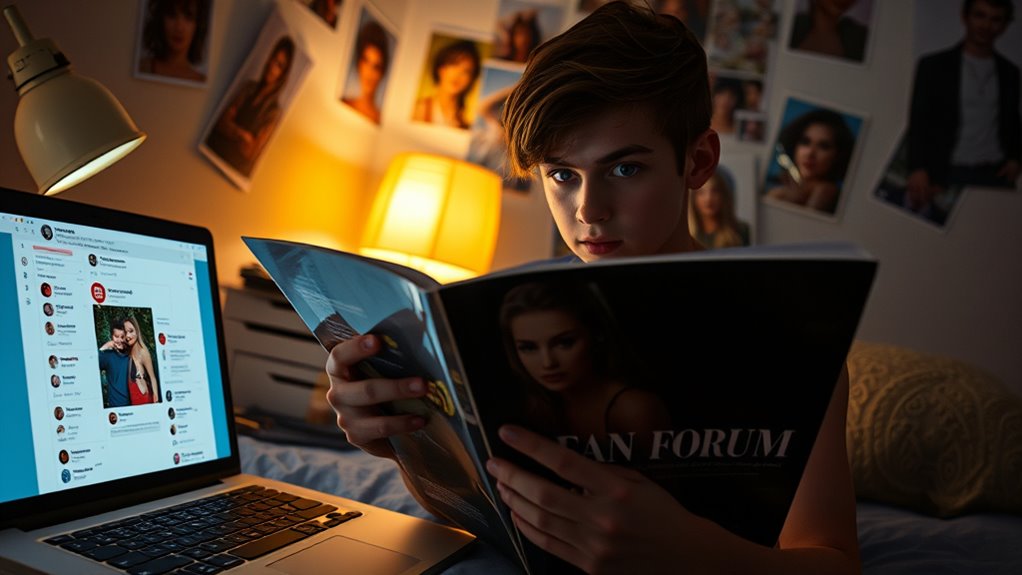

Being obsessed with a celebrity through parasocial relationships isn’t traditional cheating, but it can still impact your emotional fidelity. When you invest heavily in a distant persona and rely on it for comfort, it may weaken your personal connections and cloud your understanding of genuine intimacy. While it’s not physical infidelity, it could cause emotional distance from your partner. Want to explore how these feelings develop and what they mean for your relationships? Keep exploring to find out more.
Key Takeaways
- Parasocial relationships involve emotional investment with celebrities, which isn’t reciprocal and differs from traditional infidelity.
- Obsession with a celebrity can undermine real-life relationships but isn’t legally or morally equivalent to cheating.
- Emotional dependency on a celebrity may impact personal intimacy, yet it generally doesn’t violate a partner’s trust directly.
- The perception of cheating depends on individual boundaries; some may see excessive fandom as betrayal, others not.
- Recognizing the difference between fandom and emotional infidelity is key to maintaining healthy relationships and boundaries.

Have you ever felt a deep connection to a celebrity, influencer, or fictional character, as if you truly knew them? That’s the essence of celebrity fandom—those moments when their posts, stories, or performances resonate so strongly that it feels like they’re speaking directly to you. It’s easy to dismiss these feelings as harmless, but sometimes, they turn into emotional dependency. You might find yourself checking their social media obsessively, ardently awaiting updates, or feeling upset if you miss a post. This kind of attachment is more than casual admiration; it’s a form of connection that can blur the lines between reality and fantasy.
When you develop an emotional dependency on a celebrity, it’s almost like relying on a constant source of comfort. Unlike real relationships, these connections are one-sided. You invest time and emotion into someone who doesn’t know you personally, which can lead to a skewed sense of intimacy. It’s natural to admire and even look up to public figures, but when your sense of happiness or self-worth hinges solely on their actions or words, that’s when things get problematic. This is where the idea of parasocial relationships becomes significant—your emotional investment feels real, but it’s ultimately with someone who remains a distant, curated persona.
Emotional dependency on celebrities creates one-sided bonds that can distort genuine intimacy and self-worth.
This dependency can start subtly. Maybe you feel a surge of joy when your favorite celebrity posts a new photo or shares a personal story. Over time, these moments might become essential to your daily routine, giving you a sense of purpose or belonging. You might even go so far as to defend them fiercely in online communities or feel betrayed if they do something you dislike. This emotional attachment can sometimes resemble the dynamics of real relationships, but it’s important to recognize the difference: you’re not actually connected to the person in a meaningful, reciprocal way. Instead, you’re engaging in a kind of emotional dependency that can feel all-consuming.
Some might wonder if obsessing over a celebrity counts as cheating. While it’s not infidelity in the traditional sense, this obsession can undermine your real-life relationships. It shifts your focus away from your partner or loved ones and replaces it with an idealized figure who remains entirely out of reach. This can create feelings of guilt, jealousy, or insecurity, especially if your partner notices your intense attachment. So, while being a dedicated fan isn’t inherently wrong, letting that fandom turn into emotional dependency might damage your personal connections and skew your understanding of healthy intimacy. Additionally, these parasocial relationships can sometimes lead to unrealistic expectations about real relationships, further complicating personal bonds.

Smart Keychain Digital Business Card – Intelligent Tap to Share Contact Info Keychain- Waterproof NFC Tag- Personalized Digital Profile- Share Info, Social Media, Apps, payments, and more
🌟SIMPLE SHARING PROCESS🌟: Simply Tap your digital business card on a compatible phone or have them tap the…
As an affiliate, we earn on qualifying purchases.
As an affiliate, we earn on qualifying purchases.
Frequently Asked Questions
Can Parasocial Relationships Affect Real-Life Romantic Relationships?
Parasocial relationships can definitely affect your real-life romantic relationship. If you don’t set clear online boundaries, you might become emotionally invested in someone else, which can cause insecurity or jealousy. These emotional impacts can lead to misunderstandings or conflicts with your partner. To keep your relationship healthy, communicate openly about your feelings and make certain your online interactions don’t interfere with your real-life commitments.
How Common Are Parasocial Relationships Among Different Age Groups?
You’ll find parasocial relationships are quite common across all age groups. Younger people often engage in celebrity admiration and seek digital intimacy through social media, creating a sense of closeness. Older adults also form these connections, sometimes for comfort or nostalgia. These relationships fulfill emotional needs, making them widespread. No matter your age, it’s normal to feel connected to a celebrity or influencer online, but it’s important to maintain healthy boundaries.
Do Celebrities Ever Acknowledge Fans’ Parasocial Attachments Publicly?
Celebrities do sometimes acknowledge fans’ parasocial attachments publicly, especially through social media or interviews. They understand the importance of fan engagement and often respond to messages or show appreciation for their supporters. This acknowledgment can strengthen the connection, making fans feel seen and valued. However, not all celebrities do this regularly, and some prefer to keep their interactions more private, focusing on maintaining a respectful boundary.
Are Parasocial Relationships Considered a Mental Health Concern?
Yes, parasocial relationships can be a mental health concern. When you develop a strong digital attachment or emotional dependency on a celebrity, it may impact your real-life relationships and well-being. These connections can create unrealistic expectations or loneliness, leading to anxiety or depression. Recognizing these feelings helps you maintain a healthy balance, ensuring your emotional health isn’t compromised by excessive admiration or obsession with someone you’ve never met.
Can Parasocial Relationships Lead to Stalking or Dangerous Behavior?
Your celebrity fixation can sometimes turn into obsessive stalking if you’re not careful. When admiration spirals into obsession, it can lead to dangerous behaviors, like intrusive monitoring or risky encounters. This kind of obsessive stalking crosses a line, transforming harmless fandom into a threat. Stay aware of your boundaries, and remember that healthy admiration respects privacy and safety—don’t let your admiration become a dangerous pursuit.

Celebrity Fans Journal
As an affiliate, we earn on qualifying purchases.
As an affiliate, we earn on qualifying purchases.
Conclusion
So, while many see parasocial relationships as harmless, some argue they blur lines and feel like emotional infidelity. It’s tempting to think obsession with a celebrity counts as cheating, but ultimately, it’s about balance. If these relationships start affecting your real-life connections or your well-being, they might be more than just harmless fun. Perhaps, the truth lies in understanding that these bonds reflect a need for connection, not betrayal—making the line more nuanced than it seems.

Emotional Dependency (Single Pack)
As an affiliate, we earn on qualifying purchases.
As an affiliate, we earn on qualifying purchases.

5" Funny Motivational Quote Decorative Wooden Sign – Classic Celebrity Slogans(BLACK)- For Table top,Office,Home Decor Or As A Gift For Friends And Family – A09
Size: Our wooden sign measures 5 x 5 inches with a 4 inches metal support and it's the…
As an affiliate, we earn on qualifying purchases.
As an affiliate, we earn on qualifying purchases.