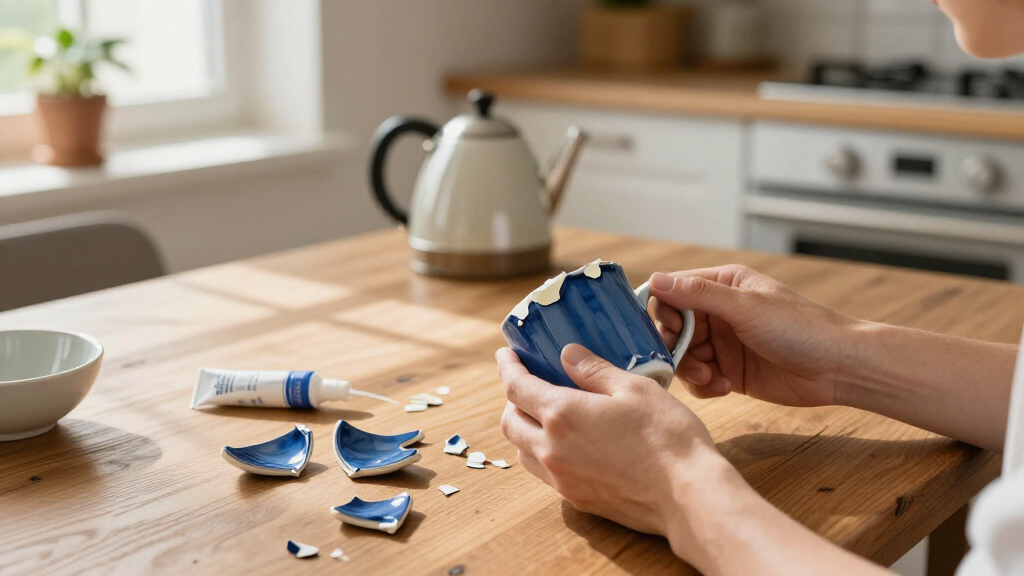

TL;DR

Get gifts for the two of you delivered free with Prime
- Fast, free delivery on millions of items
- Prime Video, Amazon Music and more included
- Member-only deals all year
A Bolde article argues that choosing to repair belongings can reflect practiced strengths such as patience, sustained attention and confidence in learning by doing. The source presents these as psychological interpretations, not as findings from a single study, and its supplied text ends before all eight traits are described.
Bolde has published an essay arguing that people who try to repair broken belongings may have developed strengths including frustration tolerance, careful observation and persistence. The piece frames repair as a habit that can build practical skills, though the source material does not cite a study testing whether people who repair things reliably show these traits.
The essay uses everyday examples—a malfunctioning coffee maker, a leaking sink and a running toilet—to describe a person who investigates a problem before buying a replacement. It says the repair process can involve staying with an unresolved problem, noticing early signs of wear and avoiding an immediate crisis response. These are the article’s interpretations of the habit, rather than measured findings supplied with the report.
Bolde also connects hands-on repairs with sustained concentration, an understanding of how systems work and the ability to teach oneself unfamiliar tasks. It invokes psychologist Albert Bandura’s concept of a mastery experience: succeeding at a difficult task can strengthen a person’s belief in their ability. The article’s excerpt attributes writing on frustration tolerance to psychologist Bernard Golden and research on task switching to attention researcher Gloria Mark, but provides no study titles, dates or direct quotations from them.
The headline promises eight strengths, but the supplied source text cuts off during its discussion of patience, the seventh listed trait. The final strength and the remainder of the original article are not included in the material available for this report.
The Skills a Repair Can Practice
Repairing an item can require a person to diagnose a fault, test a solution and adjust after failure. Those steps offer a concrete way to practice patience and problem-solving, and a successful result can give someone evidence that they can handle an unfamiliar task. The article’s examples make that practical point without establishing that repair habits predict broader personal qualities.
The distinction matters because the essay makes claims about generations as well as individuals. It suggests that younger people had fewer chances to learn repair because products are harder to open and replacements are easy to order. The supplied text does not provide data comparing age groups, access to repair, or psychological skills. Readers should treat that generational framing as the author’s argument, not a demonstrated trend.
From Household Fixes to Psychology
The piece builds its case from familiar household tasks: tightening a hose clamp, investigating a rattle or following a tutorial. It presents repair as a sequence in which people encounter uncertainty, focus on details and learn through trial and error. That is the bridge the author uses to connect practical maintenance with emotional and cognitive skills.
To support that bridge, the article names concepts and researchers. It attributes the idea that frustration tolerance is learned to Bernard Golden and refers to Albert Bandura’s account of mastery experiences. It also cites Gloria Mark’s work on attention and task switching. The excerpt does not give enough bibliographic detail to check the specific claims or show how directly those sources studied repair behavior.
““the frustration is part of the process, not a sign that the process has failed.””
— Bolde article, describing frustration during repairs
Evidence Behind the Eight Traits
The available source does not establish that people who prefer repairing possessions consistently display the listed strengths, or that repair causes them. It offers examples and references to psychological ideas, but the supplied text includes no methods, sample sizes or direct research findings linking repair behavior to patience, focus or emotional composure.
The source excerpt is incomplete: it stops partway through the seventh trait, so the eighth strength and the article’s full conclusion cannot be confirmed from the material provided. The publication date is also absent. The broader claim that younger people were not taught these skills is not supported with comparative evidence in the excerpt.
What the Full Source Could Clarify
The next step for readers seeking to assess the claims is to consult the complete Bolde article and the research it cites. The full text may identify the remaining strengths and provide links or references that are missing from the supplied excerpt. Until those materials are available, the psychological connections should be read as an essay’s interpretation of repair habits, not as a confirmed profile of everyone who fixes things.
Key Questions
What does the Bolde article say repairing things may reflect?
It links repair habits with persistence, frustration tolerance, attention to detail, concentration and self-directed learning. These are claims made by the essay; the supplied material does not show that every person who repairs belongings has these traits.
Does psychology prove that people who repair items are more patient?
The source excerpt does not provide evidence proving that relationship. It refers to psychological concepts and researchers, but gives no study directly testing whether repairers are more patient than people who replace broken items.
Which researchers does the essay mention?
The excerpt names Bernard Golden in connection with frustration tolerance, Albert Bandura for mastery experiences and Gloria Mark for attention and task switching. It does not supply full citations for the claims.
What is missing from the supplied source?
The excerpt ends during the seventh strength, patience, and does not include the eighth item or the full conclusion. It also does not state a publication date or provide detailed research citations.
Source: rss
Fall Picks
fall essentials
As an affiliate, we earn on qualifying purchases.