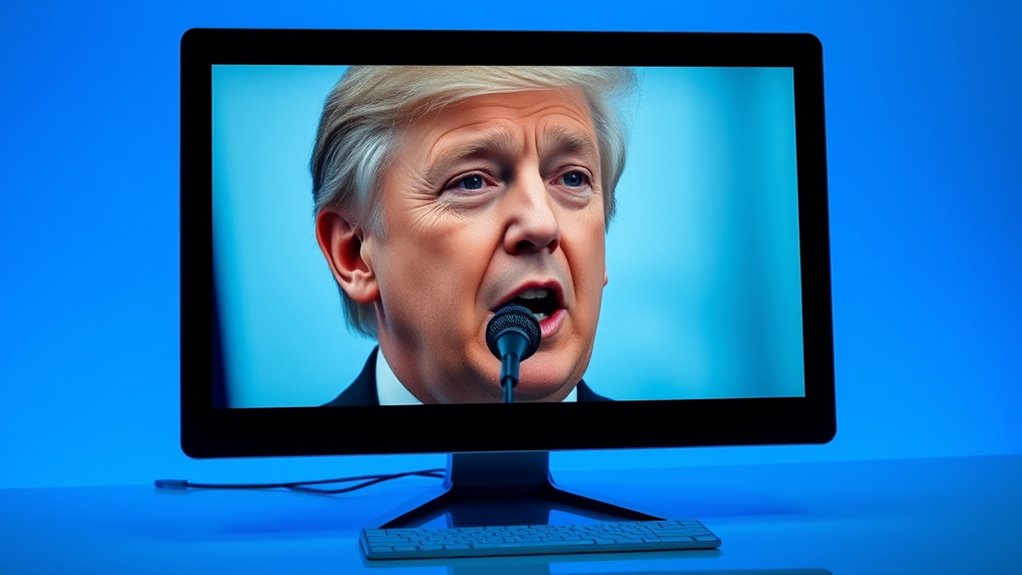

Deepfake technology is evolving rapidly, enabling you to create highly realistic videos that can falsely depict someone saying or doing things they never did. This raises serious concerns about the integrity of visual evidence, making it harder for you to distinguish truth from deception. As these tools become more accessible, the risk of misinformation and manipulation grows, potentially impacting legal cases, politics, and social trust. Stay informed, because understanding emerging transgressions is key to recognizing high-tech lies.

Get gifts for the two of you delivered free with Prime
- Fast, free delivery on millions of items
- Prime Video, Amazon Music and more included
- Member-only deals all year
Key Takeaways
- Deepfakes can convincingly fabricate evidence, making it difficult to verify authenticity in legal and investigative contexts.
- As AI-generated videos become more accessible, the risk of using fake evidence for deception and manipulation increases.
- Traditional detection methods struggle against advanced deepfakes, necessitating technological and critical verification skills.
- Digital literacy and skepticism are essential to identify manipulated content and prevent false accusations.
- The evolving landscape demands new safeguards and standards to ensure the integrity of visual evidence in the future.

Have you ever wondered if the latest tech gadgets and claims live up to their promises? In today’s digital landscape, it’s easier than ever for someone to manipulate reality. One of the most unsettling developments is AI generated videos, which can convincingly depict people saying or doing things they never actually did. These videos are a product of advanced algorithms that analyze countless hours of footage to create hyper-realistic content. With just a few clicks, you can produce a video that shows someone in a compromising or incriminating situation, even if it never happened. This ability to generate fake but believable footage introduces a new level of digital deception techniques that challenge the very notion of truth in visual media.
What makes AI generated videos particularly alarming is their seamless realism. Unlike traditional fakes or straightforward edits, these deepfakes can fool even trained eyes, making it difficult to distinguish genuine from manipulated content. For someone investigating evidence or trying to verify claims, this creates serious complications. It’s no longer enough to trust a video’s appearance; you need to be aware of the technology behind it. Digital deception techniques like deepfake creation leverage machine learning models that learn from vast datasets, enabling the synthesis of highly convincing videos. These techniques can be used maliciously to spread misinformation, blackmail, or sway public opinion, all under the guise of authenticity.
As these tools become more accessible, the threat intensifies. You might see a video online claiming to show a political figure making controversial statements or a person admitting guilt, but in reality, it’s a fabricated creation. For legal proceedings, this presents a significant challenge: how can you prove the authenticity of visual evidence? The danger is that AI generated videos could be used as false evidence in court, or to manipulate public perception on social media. The line between real and fake blurs, making it vital for investigators, journalists, and everyday users to understand digital deception techniques and develop better methods for verifying content. Additionally, the rise of such sophisticated manipulation underscores the importance of digital literacy in discerning truth from fiction.
In a world where technology can produce such convincing fakes, skepticism becomes a necessary tool. You need to question the origin of videos, look for signs of manipulation, and rely on trusted sources for verification. The rise of AI generated videos and digital deception techniques highlights the importance of digital literacy and technological safeguards. As these tools evolve, staying informed and cautious is your best defense against falling prey to high-tech lies that threaten to distort truth and undermine trust.
As an affiliate, we earn on qualifying purchases.
Frequently Asked Questions
How Can Courts Detect Deepfake Evidence Effectively?
You can detect deepfake evidence effectively by utilizing forensic detection techniques and AI analysis. These tools analyze inconsistencies in facial movements, voice patterns, and pixel data that humans might miss. You should also stay updated on emerging deepfake technologies and incorporate expert testimony. Combining forensic detection with AI analysis allows courts to identify manipulated media quickly and accurately, ensuring that only genuine evidence influences legal outcomes.
What Are the Ethical Concerns Surrounding Deepfake Technology?
Deepfake technology is a double-edged sword, like a mirror that can reflect truth or distort reality. You should be aware that ethical concerns revolve around privacy issues and consent, as deepfakes can manipulate images or voices without permission. This raises questions about trust and misuse, making it vital to contemplate how such technology impacts individual rights and societal integrity. You’re responsible for steering these moral waters carefully.
Can Deepfakes Be Used for Legitimate Creative Purposes?
Yes, deepfakes can be used for legitimate creative applications. They allow you to craft realistic visual effects, bring historical figures to life, or enhance storytelling in movies and art. While fake authenticity can be a concern, when used ethically, deepfakes offer innovative ways to push creative boundaries. Just make certain you respect consent and avoid misleading audiences, so these tools serve genuine artistic purposes rather than deception.
How Quickly Is Deepfake Technology Advancing?
Deepfake technology is advancing rapidly, driven by an ongoing AI arms race that fuels constant innovation. You’ll find that each technological leap makes deepfakes more convincing and harder to detect, challenging efforts to combat misinformation. The pace of this progress means you need to stay informed, as new tools and techniques emerge quickly, shaping the future landscape of digital media and security risks.
What Role Do Social Media Platforms Play in Combating Deepfakes?
You might think social media platforms can’t do much, but they’re actively fighting misinformation campaigns by developing tools to detect deepfakes. They prioritize user privacy while implementing AI algorithms that flag suspicious content. This balance helps prevent the spread of false information, maintaining trust. By collaborating with experts and updating policies, platforms play a vital role in protecting users from deceptive visuals, ensuring a safer online environment.
video authenticity verification tools
As an affiliate, we earn on qualifying purchases.
As an affiliate, we earn on qualifying purchases.
Conclusion
As you navigate this high-tech jungle, remember that deepfakes are like wolves in sheep’s clothing—hard to spot but dangerous. Stay vigilant, question what you see, and don’t let technology be the wolf in your digital sheep’s clothing. The future’s a wild ride, but with sharp eyes and critical thinking, you can cut through the deception like a sword through fog. Trust your instincts; they’re your best shield in this digital age.
As an affiliate, we earn on qualifying purchases.
digital evidence verification device
As an affiliate, we earn on qualifying purchases.
As an affiliate, we earn on qualifying purchases.
Halloween Picks
halloween
As an affiliate, we earn on qualifying purchases.