

The hardest part of fixing how a couple talks is choosing a tool both partners will actually stick with. After comparing twelve of the most popular options, I rank the 10 Week Couples Therapy Workbook as the best relationship communication tool for most couples because it sequences skills week by week instead of dumping advice all at once. If your main problem is fights that spiral, Love More, Fight Less is the sharper pick, while Nonviolent Communication: A Language of Life remains the framework almost every other book on this list quietly borrows from. The real tradeoff in this category is structure versus flexibility: multi-week programs demand commitment but build habits, and short script-based guides deliver quick wins with less depth. Read on for the full breakdown of all twelve, ranked by who each one genuinely helps most.

Get gifts for the two of you delivered free with Prime
- Fast, free delivery on millions of items
- Prime Video, Amazon Music and more included
- Member-only deals all year
Key Takeaways
- Structure beats page count. The top-ranked picks — the 10 Week Couples Therapy Workbook and Love More, Fight Less — won because they sequence practice into a program, while broader guides like Communication Skills for Couples cover more topics with far less follow-through.
- The category splits into scripts versus frameworks. Books like Communicate Your Feelings (Without Starting a Fight) tell you exactly what to say tonight; Nonviolent Communication and The CBT Couples Toolbox teach why your conversations break down in the first place. Most couples need one of each, not two of the same.
- Time demands vary wildly. Commitments on this list run from 5 minutes a day (Healthy Communication Skills for Couples) to a full 12 weeks (12-Week Relationship Therapy Workbook), and the longer programs only pay off if both partners actually finish them.
- Conflict gets more coverage than distance. Most of these tools target fighting and miscommunication; fewer address emotional drift, which is where the 10 Week Couples Therapy Workbook’s trust and intimacy chapters gave it an edge over the 8-week and 12-week alternatives.
- Method-backed books outclass generic ones. Titles grounded in recognizable methods like CBT and nonviolent communication transfer skills you keep for years; catch-all guides with ‘communication skills’ in the title ranked at the bottom of this roundup because they duplicate stronger picks with less rigor.





| relationship communication tool | Format | Core Focus | Structure | ASIN |
|---|---|---|---|---|
| 10 Week Couples Therapy Workbo | Paperback workbook | Communication, trust, and intimacy | Week-by-week guided exercises | B0DN3WD8XY |
| Love More | Paperback | Conflict resolution and de-escalation | Self-paced lessons, no fixed schedule | — |
| 12-Week Relationship Therapy W | Paperback workbook | Communication and conflict resolution | Weekly guided activities | B0FGDVYZQ8 |
| The Couples Communication Hand | Handbook (read-through guide) | Communication skills for marriage | Chapter-based lessons | B0DMPL6B61 |
| 8-Week Couples Therapy Workboo | Paperback workbook | Communication and emotional connection | Guided week-by-week plan | — |
| Nonviolent Communication: A La | Paperback (also eBook and audiobook) | — | Concept chapters with examples, not worksheets | — |
| Communicate Your Feelings | Kindle eBook (print edition available) | — | Short, standalone chapters | B08TB41C9C |
| Healthy Communication Skills f | Kindle eBook | — | — | B0FBH7VNNF |
| The CBT Couples Toolbox: Over | Paperback | — | — | — |
| The Talk Book: with Six Prize- | Paperback | — | — | — |
| Communication Skills for Coupl | Guide-style book | Couples communication and conflict resolution | — | 1069108952 |
| Couples Communication Workbook | Workbook with guided daily exercises | Listening skills and conflict resolution | — | B0FR3GTCFY |
More Details on Our Top Picks
10 Week Couples Therapy Workbook: Improving Communication, Trust, and Intimacy
Emotionally focused therapy (EFT) is the backbone here, and that clinical grounding earns this workbook the top spot in my lineup. Where Love More, Fight Less trains its sights on arguments, the 10 Week Couples Therapy Workbook covers the full arc — communication, trust, and intimacy — across a paced ten-week plan that gives each theme room to breathe. That structure pays off in practice: couples work through one focused unit at a time instead of sampling scattered tips. The tradeoff is commitment. Ten weeks is a real ask next to the lighter Couples Communication Workbook twelve-day format, and readers chasing a quick fix may stall out early. The tone also leans clinical, which some couples will love and others will find heavier than a casual read. For partners willing to put in steady weekly effort, this is the most well-rounded program on the list.
Pros:- Grounded in emotionally focused therapy techniques used in professional counseling
- Balanced coverage of communication, trust, and intimacy in one program
- Weekly pacing spreads the work into manageable units
- Works for both counselor-guided and self-directed couples
Cons:- Ten-week commitment is a real hurdle for couples short on time
- Therapy-style depth can feel heavy without professional guidance
- No published ratings yet to gauge reader outcomes
Best for: Couples ready to commit to a structured, therapy-grade program they can work through together over ten weeks
Not ideal for: Partners looking for a quick weekend fix — the ten-week pace and clinical tone demand steady effort from both people
- Format:Paperback workbook
- Program Length:10 weeks
- Therapeutic Basis:Emotionally focused therapy (EFT) techniques
- Core Focus:Communication, trust, and intimacy
- Structure:Week-by-week guided exercises
- Intended Use:Marriage counseling support and self-help
- Audience:Couples at any relationship stage
- ASIN:B0DN3WD8XY
Our verdict“The strongest all-around choice for couples willing to invest ten steady weeks in therapy-grade work.”
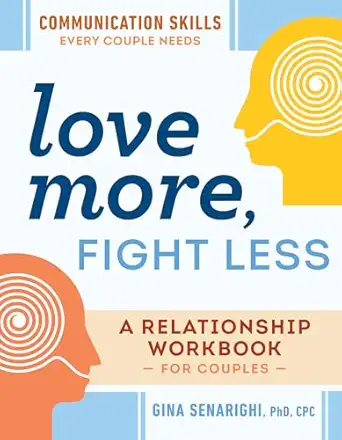
Love More, Fight Less: Communication Skills Every Couple Needs
Most workbooks in this roundup spread their attention across trust, intimacy, and connection; Love More, Fight Less plants its flag on the fight itself. The exercises target conflict de-escalation — how to disagree without doing damage — which makes it the sharpest tool here for couples stuck in repeating argument loops. Compared with the broader 10 Week Couples Therapy Workbook, the scope is narrower, and that focus cuts both ways: partners whose main frustration is bickering get more relevant practice per page, while couples whose core issue is emotional distance may want the intimacy work in the 12-Week Relationship Therapy Workbook instead. It also reads like a skills manual rather than a guided program, so no week-by-week pacing keeps you honest. For high-conflict pairs, that tradeoff is worth making.
Pros:- Laser focus on conflict de-escalation and fair fighting
- Practical exercises couples can apply mid-disagreement
- Accessible tone that works without any therapy background
Cons:- Narrower scope than full-program workbooks — light on trust and intimacy repair
- No week-by-week structure, so pacing and accountability are self-managed
- Limited supplementary material compared with exercise-dense toolboxes
Best for: Couples whose biggest problem is recurring arguments and who want targeted de-escalation practice
Not ideal for: Partners whose core issue is emotional distance or fading intimacy rather than fighting — the conflict focus won’t reach it
- Format:Paperback
- Approach:Practical communication exercises and insights
- Core Focus:Conflict resolution and de-escalation
- Secondary Focus:Understanding and intimacy
- Structure:Self-paced lessons, no fixed schedule
- Audience:Couples in high-conflict patterns
- ISBN-10:0593196651
Our verdict“The right pick for couples who fight often and want to stop, less so for those who have drifted apart.”
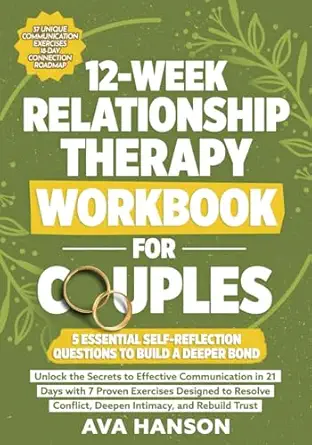
12-Week Relationship Therapy Workbook for Couples
Where the 8-Week Couples Therapy Workbook compresses the work into two months, this one stretches it across twelve weeks built around seven core exercises — and the slower cadence is the point. Rebuilding trust rarely happens on a deadline, so the extended timeline gives couples room to repeat, falter, and retry before moving on. That makes this pick better suited to couples repairing real damage — a betrayal, a long cold spell — than the quick-start options in this roundup, like the twelve-day Couples Communication Workbook. The downside is variety: seven exercises over twelve weeks means far fewer activities than the 45 packed into The CBT Couples Toolbox, and couples who bore easily may find the repetition wearing. Published detail is also thin, so buyers are committing partly on faith. For patient couples doing serious repair, the slow build is exactly right.
Pros:- Twelve-week timeline gives trust repair room to actually happen
- Seven core exercises repeated deliberately to build lasting habits
- Covers the full arc: communication, conflict, intimacy, and trust
Cons:- Far less exercise variety than options like The CBT Couples Toolbox
- Sparse published detail makes it a leap of faith at checkout
- Long commitment raises the odds couples drop off midway
Best for: Couples repairing a breach of trust who need a slow, structured twelve-week rebuild rather than a crash course
Not ideal for: Easily bored readers — seven exercises repeated across twelve weeks offers less variety than exercise-dense alternatives
- Format:Paperback workbook
- Program Length:12 weeks
- Exercises:7 core proven exercises
- Core Focus:Communication and conflict resolution
- Secondary Focus:Intimacy building and trust repair
- Structure:Weekly guided activities
- Audience:Couples committed to long-term repair
- ASIN:B0FGDVYZQ8
Our verdict“Worth the twelve weeks if you’re rebuilding broken trust; overkill if you just need conversation basics.”
The Couples Communication Handbook: The Skills You Never Learned for the Marriage You Always Wanted
Every other pick in this batch is a workbook with a clock on it; The Couples Communication Handbook drops the schedule and teaches the underlying skills most people never formally learned as a straightforward read. That makes it the natural first stop for a partner who wants to understand communication mechanics before committing to a program like the 10 Week Couples Therapy Workbook, and a useful companion for couples already in counseling who want language for what they’re working on. The payoff is literacy: readers come away knowing why conversations derail, not just which exercise to try next. The flip side is accountability — no weekly plan, no sequenced exercises, and no ratings trail yet means motivation is entirely on you. Self-starters will finish it; procrastinators should pick a workbook instead.
Pros:- Teaches foundational skills most people were never taught
- No schedule pressure — read and apply at your own pace
- Strong companion read alongside counseling or a structured workbook
Cons:- No exercises or weekly plan, so accountability is entirely on the reader
- Skill explanations without guided practice may not stick for hands-on learners
- No ratings history yet to validate the approach
Best for: Self-motivated readers who want to learn communication skills at their own pace, or couples in counseling wanting extra context
Not ideal for: Couples who need external structure — with no weekly plan or guided exercises, follow-through is entirely self-driven
- Format:Handbook (read-through guide)
- Approach:Skill-based instruction without a fixed schedule
- Core Focus:Communication skills for marriage
- Goals:Understanding, connection, conflict resolution
- Structure:Chapter-based lessons
- Audience:Married couples and self-directed learners
- ASIN:B0DMPL6B61
Our verdict“A smart first read for understanding how couple communication works, as long as you can self-motivate.”
8-Week Couples Therapy Workbook: Essential Strategies to Connect, Improve Communication, and Strengthen Your Relationship
Eight weeks is the shortest structured program in this roundup, and that’s exactly why it earns a place: couples new to relationship work are far more likely to finish two months than the twelve demanded by the 12-Week Relationship Therapy Workbook. The step-by-step weekly format lowers the barrier further — each session builds on the last, so partners always know what to do when they sit down together. Compared with The Couples Communication Handbook, which explains skills but leaves pacing to the reader, this pick simply hands over a plan. The compromise is depth: a shorter runway leaves less room for the trust-rebuilding work the longer workbooks handle better, and published detail on its contents is thin. Couples facing serious ruptures should look at the heavier options; couples testing the waters should start here.
Pros:- Shortest structured program in the lineup at eight weeks
- Step-by-step weekly guidance removes guesswork for newcomers
- Manageable commitment makes couples more likely to finish
Cons:- Less depth on trust rebuilding than the ten- and twelve-week options
- Requires steady buy-in from both partners to work
- Thin published content detail compared with better-documented picks
Best for: Couples trying structured relationship work for the first time who want a clear, low-pressure starting point
Not ideal for: Partners dealing with serious breaches of trust — the eight-week format leaves less room for deep repair work
- Format:Paperback workbook
- Program Length:8 weeks
- Approach:Step-by-step weekly strategies
- Core Focus:Communication and emotional connection
- Goal:Emotional intimacy and healthier interactions
- Structure:Guided week-by-week plan
- Participation:Designed for both partners together
- ISBN-10:163807948X
Our verdict“The easiest on-ramp for couples new to structured relationship work who want a plan they can actually finish.”
Nonviolent Communication: A Language of Life
Marshall Rosenberg’s Nonviolent Communication earns the top spot because it gives couples a complete framework rather than a stack of tips. The four-part model — observation, feeling, need, request — explains why conversations go wrong, not just what to say instead, which is where narrower titles like Communicate Your Feelings (Without Starting a Fight) stop short. I rank it above The CBT Couples Toolbox for most readers because one coherent method is easier to remember mid-argument than 45 separate exercises. The tradeoff: it reads more like a philosophy than a workbook, and the phrasing can feel unnatural until a couple has practiced it for weeks. Readers wanting scripts or quick daily drills will get faster early wins from Healthy Communication Skills for Couples. But as the foundation everything else in this roundup builds on, nothing else matches its long-term payoff.
Pros:- Foundational four-step model that addresses why conflict happens, not just what to say
- Skills transfer beyond the relationship to family and workplace conversations
- One coherent method is easier to recall under stress than scattered tips
- The most durable payoff of any book in this roundup
Cons:- Steeper learning curve than exercise-driven books
- The scripted phrasing sounds stilted until both partners practice it for weeks
- Light on structured exercises for couples who learn by doing
Best for: Couples who keep replaying the same argument and want one shared framework that changes the pattern rather than patching individual fights
Not ideal for: Partners who want fill-in-the-blank worksheets — this is a read-and-practice book, not a guided workbook
- Author:Marshall B. Rosenberg
- Format:Paperback (also eBook and audiobook)
- Publisher:PuddleDancer Press
- Pages:264 (3rd edition)
- ISBN-10:189200528X
- Method:Nonviolent Communication (NVC) four-step model
- Structure:Concept chapters with examples, not worksheets
- Scope:Couples, family, and workplace communication
Our verdict“The book to buy first if a couple will only read one title on this list.”
Communicate Your Feelings (Without Starting a Fight): What to Say and What Not to Say to Your Partner
Where Nonviolent Communication asks readers to absorb a whole philosophy, Communicate Your Feelings (Without Starting a Fight) meets couples at the exact moment things go sideways: it tells them what to say and what not to say. I recommend it as the entry point in this roundup because the barrier to starting is low — short chapters, plain language, and advice a partner can apply in tonight’s conversation. Compared with Healthy Communication Skills for Couples, which builds change through daily exercises, this one works more like an emergency phrasebook. That immediacy is also its limit. It addresses one skill — expressing feelings without triggering defensiveness — so couples who also need listening practice or structured repair work will outgrow it and should graduate to The CBT Couples Toolbox. As a first step for conflict-shy couples, though, it’s the least intimidating buy here.
Pros:- Phrase-level do’s and don’ts that work the same night you read them
- Short and low-commitment compared with full programs
- Laser-focused on stopping fights before they start
- Cheap, low-risk entry point into communication work
Cons:- Narrow scope — one skill rather than a full toolkit
- Little structured practice, so gains depend on self-application
- Couples will outgrow it once basic expression stops being the problem
Best for: Couples new to communication work whose talks escalate fast and who want usable wording for the very next conversation
Not ideal for: Couples who already argue calmly but feel emotionally distant — it covers expression, not intimacy-building
- Author:Nic Saluppo
- Format:Kindle eBook (print edition available)
- ASIN:B08TB41C9C
- Approach:Phrase-level do’s and don’ts
- Focus:Expressing feelings without triggering conflict
- Structure:Short, standalone chapters
- Commitment level:Read-and-apply; no daily program
Our verdict“Buy this first if the core problem is that every honest conversation turns into an argument.”
Healthy Communication Skills for Couples: How to Prevent Miscommunication, Increase Empathy & Effective Listening to Turn Conflict into Connection & Deepen Intimacy in 5 Minutes a Day
The pitch here is five minutes a day, and that is exactly who should buy it. Healthy Communication Skills for Couples turns empathy and active listening into small daily reps rather than weekend homework, which makes it the most sustainable option for partners who have already abandoned a longer workbook. Against The CBT Couples Toolbox‘s 45-plus exercises, the load here is lighter and the emotional tone warmer — it frames conflict as a route to intimacy, not a problem to solve. The catch is depth: five-minute drills can rebuild habits but won’t carry a couple through entrenched resentment the way Nonviolent Communication‘s full model can. I place it in the middle of the ranking — easier to stick with than anything else on this list, but less transformative. For time-poor couples rebuilding a habit, it’s the right-sized tool.
Pros:- Five-minute daily format is the easiest on this list to sustain
- Builds change through habit rather than willpower
- Balances listening, empathy, and intimacy instead of fixating on fights
- Frames conflict as connection, which keeps both partners willing
Cons:- Too light for severe or long-running conflict
- Requires both partners to show up every day — skip a week and momentum dies
- Less conceptual depth than framework-based books
Best for: Dual-career couples or new parents who can realistically spare five minutes a day and want a shared daily ritual
Not ideal for: Couples in deep, long-standing conflict — daily micro-exercises are maintenance, not intensive repair
- Format:Kindle eBook
- ASIN:B0FBH7VNNF
- Daily commitment:5 minutes
- Core skills:Empathy, active listening, miscommunication prevention
- Goal:Turn conflict into connection and deepen intimacy
- Approach:Short daily exercises for both partners
- Best use:Ongoing daily habit rather than one-time read
Our verdict“The best pick for couples whose real obstacle is finding time, not finding techniques.”
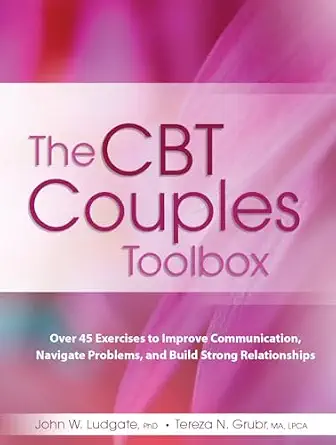
The CBT Couples Toolbox: Over 45 Exercises to Improve Communication, Navigate Problems and Build Strong Relationships
If the other books on this list teach ideas, The CBT Couples Toolbox assigns homework. Its 45-plus exercises come from cognitive-behavioral therapy, so each one targets a specific pattern — catastrophic thinking, score-keeping, mind-reading — rather than offering general advice. That’s a different proposition from Healthy Communication Skills for Couples‘ gentle daily prompts: this is closer to a course, and it asks for real sessions, notebooks open. I rank it above The Talk Book because its method has clinical grounding rather than a proprietary tool set, and the exercise variety means couples can skip what doesn’t fit. The honest tradeoff is friction. Partners who won’t sit down together for structured work will abandon it by chapter two, and anyone after a quick script should start with Communicate Your Feelings (Without Starting a Fight) instead. For motivated couples who want therapy-style work without the therapy bill, it’s the deepest tool here.
Pros:- Over 45 concrete exercises, the largest practice set in this roundup
- Grounded in CBT, an evidence-based clinical method
- Targets specific thinking patterns instead of dispensing generic advice
- Works alongside therapy or as a lower-cost first step
Cons:- Demands scheduled joint sessions and real effort
- Feels clinical rather than warm — less about intimacy, more about technique
- Not a quick fix; couples wanting fast scripts should look elsewhere
Best for: Couples considering therapy who want a structured, clinician-style program to work through together first
Not ideal for: Couples where one partner is reluctant — unfinished worksheets breed more resentment than no book at all
- Format:Paperback
- ISBN-10:1683731026
- Publisher:PESI Publishing
- Exercise count:45+
- Method:Cognitive-behavioral therapy (CBT)
- Time model:Session-based, not daily
- Skill focus:Communication, problem-solving, relationship-building
- Best use:Guided joint practice, alone or alongside counseling
Our verdict“The strongest option for committed couples who treat communication as a skill to train, not a mood to wait for.”
The Talk Book: with Six Prize-Winning Talk Tools That Strengthen Relationships and Repair Communication Breakdowns
The Talk Book builds everything around six prize-winning talk tools, and its real specialty is repairing communication breakdowns — the conversations that already went wrong. That makes it a useful complement rather than a foundation: I’d hand it to a couple after a blow-up, while Nonviolent Communication is the book that prevents the blow-up. The toolkit format is easy to dip into, and each tool is simple enough to remember under stress, which gives it an edge over the denser CBT Couples Toolbox when emotions are still hot. It lands last in my ranking for two reasons: the six-tool system is narrower than the full frameworks above it, and the independent-press production feels rougher in editing and structure than Communicate Your Feelings (Without Starting a Fight). As a second book for repair-specific situations, it earns its place; as a first or only book, it doesn’t.
Pros:- Six simple tools that are easy to recall mid-conflict
- Specifically addresses post-fight repair, a gap most books skip
- Modular format allows dipping in without reading cover to cover
- Low reading commitment compared with full programs
Cons:- Narrower than the framework-based books ranked above it
- Looser editing and structure than mainstream-press titles
- Little guidance on preventing conflict before it starts
Best for: Couples recovering from recurring blow-ups who want simple, memorable tools for the repair conversation itself
Not ideal for: First-time readers of communication books — start with a fuller framework and add this one later
- Format:Paperback
- ISBN-10:1439246890
- Publisher:Independent press (BookSurge)
- Core content:Six talk tools
- Focus:Repairing communication breakdowns
- Reading style:Modular, non-sequential
- Best use:Supplement to a primary communication book
Our verdict“Worth adding as a repair kit once a couple already owns a foundational book.”
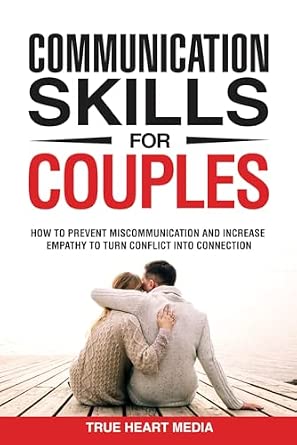
Communication Skills for Couples: Guide to Improve Communication, Resolve Conflict, Deepen Intimacy, Strengthen Marriage, and Create a Healthy Relationship
Where most entries in this roundup ask couples to follow a set program, Communication Skills for Couples works as a read-at-your-own-pace guide, and that flexibility is its main selling point. Compared with the 10 Week Couples Therapy Workbook, there’s no schedule to keep and no exercises to complete — partners can jump straight to the chapter on conflict or intimacy that matches their current strain. That makes it a lower-friction starting point for couples where one partner resists structured homework. The tradeoff is accountability: without the daily prompts built into the Couples Communication Workbook, it’s easy to read, nod along, and change nothing. I’d also flag the lack of published detail on length and author background, plus no reader ratings yet, so buyers are going in somewhat blind on depth.
Pros:- Self-paced format with no schedule or deadlines to maintain
- Covers the full arc: communication, conflict resolution, intimacy, and marriage strengthening
- Low-friction entry point for partners who resist structured programs
- Practical strategy focus rather than abstract theory
Cons:- No exercises or daily structure, so follow-through depends entirely on the couple
- No customer ratings or reviews available to gauge content quality
- Little published detail on length, depth, or author credentials
Best for: Couples who want a flexible, self-directed read they can dip into by topic — especially where one partner dislikes workbook-style homework
Not ideal for: Partners who need external accountability — with no scheduled exercises, unmotivated readers will shelve it after a chapter or two
- Format:Guide-style book
- Approach:Practical communication strategies
- Core Focus:Couples communication and conflict resolution
- Topics Covered:Conflict resolution, intimacy building, marriage strengthening
- Program Structure:Self-paced, no set schedule
- Intended Audience:Couples and married partners
- ASIN:1069108952
Our verdict“The right pick for couples who prefer reading at their own pace over committing to a structured daily program.”
Couples Communication Workbook: 20 Minutes a Day for 12 Days to Improve Listening, Resolve Conflicts, and Strengthen Your Relationship
The Couples Communication Workbook compresses the whole category into a promise busy partners can actually keep: 20 minutes a day for 12 days. Set against the 12-Week Relationship Therapy Workbook for Couples, which demands a full season of steady effort, this is the low-commitment on-ramp — short enough that even a skeptical partner will see it through, and the daily listening and conflict exercises build a habit through practice rather than dumping theory. Compared with the broader Communication Skills for Couples guide, though, twelve days means shallower coverage of intimacy and long-standing resentments; issues that have festered for years won’t resolve in under two weeks. Like several newer entries here, it also ships without reader reviews, so exercise quality is a leap of faith. I’d point it toward couples rebuilding a routine, not those in crisis.
Pros:- Clear 12-day structure with a fixed 20-minute daily commitment
- Exercise-based format builds listening and conflict-resolution skills through repetition
- Short timeline wins buy-in from reluctant or busy partners
- Targets the two friction points couples hit most: listening and fights
Cons:- Twelve days limits depth on complex or long-standing relationship issues
- Requires both partners to show up daily — missed days break the program’s momentum
- No reader reviews or detailed content preview available yet
Best for: Busy couples who want a structured reset and can protect 20 focused minutes together each day for under two weeks
Not ideal for: Couples in serious crisis or carrying deep resentment — a 12-day format is too shallow for issues that need sustained, longer-term work
- Format:Workbook with guided daily exercises
- Program Length:12 days
- Daily Time Commitment:20 minutes per day
- Core Focus:Listening skills and conflict resolution
- Approach:Structured daily practice
- Intended Audience:Couples seeking to strengthen their relationship
- ASIN:B0FR3GTCFY
Our verdict“The fastest structured option in this roundup — best for couples who need momentum and a shared daily habit, not deep repair work.”

How We Picked
I compared all twelve tools the way a buyer actually would: as a couple with a problem to solve and limited patience. Five criteria drove the ranking. Structure and follow-through carried the most weight, because a communication tool only works if both partners keep using it past week one. Exercise quality came next — prompts that produce a real conversation scored higher than summaries of advice you have heard before. I also weighed skill transfer (does the technique work on problems the book never mentions) and time demand (daily minutes plus total program length), with breadth of coverage as the final tiebreaker.
The ordering reflects those priorities. Structured workbooks rose to the top because sequencing is what most couples lack, not information. Framework classics like Nonviolent Communication rank high on influence and transfer but lose ground for offering no program to follow. Generic skills guides — the ones promising to fix conflict, intimacy, and marriage in one catch-all volume — sit at the bottom because they repeat what the stronger picks cover. Every book here is affordable, so price mattered less than the real cost: the hours a couple invests.
Factors to Consider When Choosing Relationship Communication Tools
Twelve books promising better conversations can blur together fast, and the blur is where bad purchases happen. The factors below are the ones that actually separate a tool a couple finishes from a book that dies on the nightstand — format, time honesty, partner buy-in, and knowing the limits of self-help. They apply no matter which of the twelve you are leaning toward.
Match the Format to How You Actually Learn
The single biggest predictor of success here is format fit. Structured workbooks like the 10 Week Couples Therapy Workbook and the 12-Week Relationship Therapy Workbook parcel the work into weekly sessions, which suits couples who want a plan handed to them. Narrative frameworks like Nonviolent Communication read like philosophy; they change how you think, but nobody schedules your practice for you. Script-based guides such as Communicate Your Feelings (Without Starting a Fight) sit in between, giving exact phrasing without a program. A common mistake is buying a narrative classic and expecting workbook results — the insight lands, then nothing changes because no exercises force the new habit. If past self-help books have stalled out on your shelf, pick the most structured format on the list, not the most famous one.
Decide Whether You Need Scripts or a Framework
Half this list tells you what to say; the other half explains why your conversations fail. Script tools — Communicate Your Feelings, or The Talk Book with its six talk tools — are best when you freeze mid-argument and need language you can borrow tonight. Framework tools like Nonviolent Communication and The CBT Couples Toolbox rebuild the underlying pattern, which takes longer but generalizes to problems no script anticipates. Buying two script books gives you redundancy, not range. The stronger play is one of each: a framework for the long game, a script book for the next hard conversation. Couples early in the repair process usually benefit from scripts first, because a quick win buys goodwill for the slower framework work.
Be Honest About the Time You Will Actually Commit
Program length on this list runs from 12 days to 12 weeks, and that spread matters more than any feature. A 12-week program only outperforms a 12-day program if you finish it — an abandoned deep program teaches less than a completed short one. The five-minutes-a-day format of Healthy Communication Skills for Couples exists because the authors know most couples quit heavier plans. My rule of thumb: choose the shortest program that still addresses your actual problem. Couples in a stable rough patch do fine with the 20-minutes-a-day Couples Communication Workbook; couples rebuilding after a breach of trust should budget for the longer, slower workbooks instead. Overbuying commitment is the most common mistake in this category, and it wastes the one resource these books cannot refund — momentum.
Plan for the Partner Who Will Not Read
Most of these tools assume two willing readers, and that assumption breaks in real households. If your partner is reluctant, unilateral tools matter: Nonviolent Communication and Communicate Your Feelings both work when only one person changes their side of the conversation, because scripts and listening frames do not require cooperation to function. Dual-reader workbooks like the 10 Week and 8 Week Couples Therapy Workbooks include joint exercises that stall without both partners at the table. A frequent mistake is buying a joint workbook for an unwilling partner, which turns the book into evidence of the problem rather than a fix for it. Start solo-capable, then graduate to a joint program once your partner sees the change rather than hears the pitch.
Know When a Book Is Enough and When It Is Not
Every tool on this list is a skill-building aid, and skill-building has limits. These books work well for miscommunication, recurring arguments, emotional drift, and stale habits — the normal wear of long relationships. They are the wrong instrument for active crises: betrayal trauma, addiction, contempt that has hardened into disgust, or any situation involving safety. In those cases a licensed therapist is not an upgrade over a book; it is a different category of help entirely. Several picks here, including the 10 Week and 12 Week Couples Therapy Workbooks, are built to complement counseling rather than replace it, and they work well as between-session homework. Spending fifteen dollars on a workbook is a reasonable first step for most couples, as long as you treat persistent gridlock after a finished program as a signal to escalate, not to buy book number thirteen.
Why Price Is Rarely the Real Tradeoff
Unlike most product categories, everything here costs roughly the same — a paperback’s difference of a few dollars should almost never drive the decision. The real currency is attention: an hour a day for 12 weeks is a bigger spend than any cover price. Value in this roundup means insight per hour invested, which is why the compact 12-day workbook ranks as a value pick despite covering less ground than the 12-week programs. Where money does matter is format: paperback workbooks get written in and worn out, so couples who want to revisit exercises later may prefer keeping one clean reference book, like The Couples Communication Handbook, alongside a disposable workbook. Buy for the hours you will genuinely spend, and the pricing takes care of itself.
Frequently Asked Questions
Can a communication book really replace couples therapy?
For skill gaps, yes; for crises, no. A large share of what couples practice in early therapy sessions — reflective listening, softened startups, I-statements, time-outs that actually work — is exactly what structured workbooks like the 10 Week Couples Therapy Workbook teach at a fraction of the cost. Where books fall short is diagnosis: a book cannot tell you that your fights about dishes are really about an unresolved betrayal, and it cannot referee when a conversation escalates. Couples dealing with trauma, addiction, or deep contempt should treat these tools as homework alongside a licensed therapist, not a substitute for one. A practical test: if you can still manage one calm ten-minute conversation a week, a workbook is a reasonable starting point. If you cannot, start with a professional and let the book support that work.
What if my partner refuses to read a relationship book with me?
You can still make real progress, but your choice of tool narrows. Single-reader tools like Communicate Your Feelings (Without Starting a Fight) and Nonviolent Communication work unilaterally because they change what you bring to the conversation — your phrasing, your listening, your timing — without asking your partner to study anything. Joint workbooks like the 8 Week and 12 Week Couples Therapy Workbooks assume two participants, and pressing one on an unwilling partner usually backfires. The approach that works most often is quiet modeling: use the techniques, let the improvement speak, and offer the book only when your partner asks what changed. Many reluctant partners come around once a tool is framed as a short shared experiment, which makes the 12-day Couples Communication Workbook a useful low-stakes invitation.
Is a workbook better than a regular relationship book?
Neither is universally better; they solve different problems. Workbooks win on behavior change because exercises force you to practice a skill on your actual relationship this week, not nod along to someone else’s marriage. Narrative books like Nonviolent Communication win on depth of understanding — they rewire how you interpret your partner’s motives, which a fill-in-the-blank page rarely does. If your fights are frequent and you need tactics now, a workbook or script guide is the right first buy. If your conversations are polite but hollow, a framework book often lands harder. Plenty of couples end up with one of each, and the reviews above flag which format each pick uses so you can mix deliberately instead of accidentally.
How long does it take for these tools to make a difference?
Expect small wins in the first two weeks and durable change in two to three months of steady practice. Script-based tools pay off fastest — a borrowed phrase from Communicate Your Feelings can defuse the very next argument. Program workbooks build slower because each week stacks on the last; the 10 Week Couples Therapy Workbook is calibrated so that listening skills from week one become the foundation for trust repairs later. Framework books like The CBT Couples Toolbox fall in between: individual exercises help immediately, but the thinking habits take repetition to stick. The realistic failure mode is quitting at week three when the novelty fades, so attach the practice to an existing routine — after dinner, Sunday morning — rather than relying on motivation.
Which tool should we start with if our biggest problem is constant arguing?
Start with a tool built for de-escalation rather than a general program. Love More, Fight Less is the most direct match on this list because its exercises target the fight cycle itself — triggers, escalation, repair — instead of broad communication theory. Communicate Your Feelings (Without Starting a Fight) is the better fit if one of you knows what you feel but phrases it badly enough to start the next round. Couples whose arguments follow the same script every time often do well pairing either of those with The CBT Couples Toolbox, which helps you spot the thought patterns fueling the loop. Save the longer therapy workbooks for after the temperature drops; they assume a baseline of calm that chronic fighters have not rebuilt yet. Once arguments cool from daily to occasional, a structured program like the 10 Week workbook consolidates the peace.
Conclusion
Best overall: the 10 Week Couples Therapy Workbook earns the top spot because it balances structure, depth, and breadth — communication, trust, and intimacy in one program most couples can actually finish. Best value: the Couples Communication Workbook delivers a complete starter program in 12 days at 20 minutes a day, the lowest-commitment way to test whether a structured approach helps your household. The premium commitment: in a category where prices barely differ, the 12-Week Relationship Therapy Workbook is the biggest investment of time — the right call for couples rebuilding after serious damage who want the slowest, deepest program here. Best for beginners: Healthy Communication Skills for Couples, whose five-minutes-a-day format removes every excuse a skeptical partner can raise. For conflict-heavy households, Love More, Fight Less is the sharper first buy, and readers who want the theory behind the tactics should start with Nonviolent Communication — the framework half this list quietly stands on. Whichever you choose, the ranking above reflects one belief: the best relationship communication tool is the one both of you will still be using in week six.
Halloween Picks

DomKom 6 ft Halloween Inflatable Ghosts Roasting Marshmallows

12.2 ft Halloween Inflatable Outdoor Decoration – Giant Pumpkin

Jenaai 5.3-Foot Motion-Activated Halloween Animatronic Skeleton
As an affiliate, we earn on qualifying purchases.