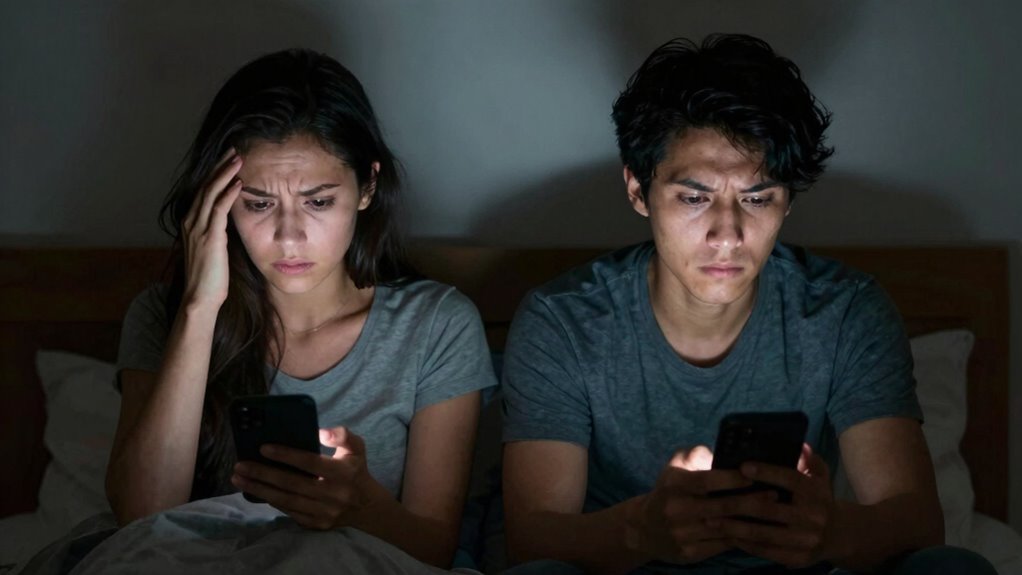

You may not realize how relying on chatbots for emotional support can quietly undermine your marriage. It’s easy to turn to a chatbot for comfort since it listens without judgment and offers quick responses, but over time, this can shift your connection with your partner. It might feel harmless at first, yet this dependency can create emotional distance and weaken intimacy without you noticing. Keep exploring to understand how to balance technology and genuine connection in your relationship.

Get gifts for the two of you delivered free with Prime
- Fast, free delivery on millions of items
- Prime Video, Amazon Music and more included
- Member-only deals all year
Key Takeaways
- Emotional reliance on chatbots can subtly replace genuine intimacy, making it difficult to reconnect with a partner.
- Digital interactions often provide easier, judgment-free support, reducing motivation to seek help from a spouse.
- Over time, dependency on chatbots erodes trust and communication, creating emotional barriers in marriage.
- Recognizing and addressing the shift in emotional patterns is crucial to prevent long-term relationship strain.
- Balancing technology use and fostering real connection is essential to overcoming the harder feelings associated with dependency.

As technology becomes more integrated into daily life, many couples find themselves turning to chatbots for companionship and support. It’s easy to see how this can create a subtle shift in emotional reliance. When you start confiding in a chatbot, it can feel comforting—like having an always-available ear that listens without judgment. Over time, this might seem harmless, even helpful, especially during moments when real-life communication feels strained or insufficient. But what begins as a simple interaction can gradually deepen into a dependency that’s harder to recognize.
This dependency begins to alter communication dynamics within your relationship. Instead of turning to your partner, you might find yourself seeking solace from a chatbot. It’s faster, less complicated, and offers immediate responses, which can make it tempting to rely on it for emotional support rather than addressing issues directly with your spouse. What’s more, as your conversations with the chatbot become more frequent, you might start to feel less motivated to engage in meaningful dialogue with your partner. This creates a silent barrier, subtly eroding the trust and intimacy that once defined your connection.
You might not even notice how your emotional reliance on a chatbot grows until it starts to impact your relationship. It’s easy to justify these interactions as harmless or even necessary, especially if you feel your partner isn’t always there for you in the way you need. But the truth is, these digital interactions can distort your expectations and perceptions of real intimacy. You might begin to prefer the non-judgmental, always-available nature of a chatbot over the unpredictable, sometimes imperfect communication you share with your spouse. This shift can lead to a cycle where emotional reliance on technology replaces the vulnerability and genuine connection that relationships thrive on. Additionally, understanding watt-hours and capacity can help you better gauge the impact of technology on your emotional well-being and how it influences your relationship dynamics. Recognizing how emotional energy is affected by digital interactions can help you make more conscious choices about where to invest your emotional resources. Taking the time to evaluate the visual cues and emotional responses in your digital exchanges can also illuminate how technology shapes your perceptions and feelings about intimacy.
Furthermore, being aware of color accuracy and contrast ratios in your digital interactions can help you understand how visual and emotional cues are perceived and processed, which influences your overall connection with your partner. In the end, it’s important to recognize how these dynamics influence your emotional well-being and your marriage. Turning to a chatbot for support can be a temporary relief, but if it becomes a substitute for real intimacy, it risks creating emotional distance. To nurture your relationship, you need to be mindful of how your communication patterns evolve and confront the reasons why you seek comfort outside of your partnership. Building awareness about these tendencies allows you to restore a healthier balance—where both emotional reliance and communication with your spouse remain strong. Recognizing the impact of technology on emotional connections can help you foster a more resilient and authentic partnership.
Popular right now

Vitamix Propel Series 750 Professional-Grade Blender, 4 Programs, Black

LG C2 Series 65-Inch OLED evo 4K Smart TV (OLED65C2PUA, 2022)

Breville Bambino Espresso Machine, Brushed Stainless Steel
As an affiliate, we earn on qualifying purchases.
Frequently Asked Questions
Can Chatbot Dependency Lead to Emotional Neglect in Marriage?
Yes, chatbot dependency can lead to emotional neglect in marriage. When you rely heavily on chatbots for emotional support, you might neglect your partner’s emotional intimacy, making them feel unvalued. Over time, this dependency can cause trust erosion, as your partner perceives a lack of genuine connection. To maintain a healthy relationship, it’s essential to prioritize real interactions and openly communicate, ensuring emotional needs are met by each other.
How Does Chatbot Reliance Affect Real-Life Communication Skills?
Think of relying on chatbots as building a bridge with fragile planks. You might cross easily, but over time, your real-life communication skills weaken. You lose the ability to navigate complex emotions and nuanced conversations. Setting digital boundaries helps you maintain this balance. By consciously engaging in genuine, face-to-face interactions, you strengthen your skills, ensuring your communication remains authentic and resilient, even when digital tools are part of your daily life.
Are There Age Differences in Chatbot Dependency Among Couples?
Yes, age differences can influence chatbot dependency among couples. Younger partners might lean more on chatbots for instant support and companionship, while older partners may prefer direct communication, affecting dependency dynamics. As the age gap widens, these tendencies can grow more pronounced, potentially creating misunderstandings or emotional gaps. Recognizing these differences helps couples navigate dependency, fostering healthier interactions and ensuring technology enhances rather than hinders their relationship.
What Signs Indicate Unhealthy Chatbot Dependence in Marriage?
You might notice signs of unhealthy chatbot dependence when digital boundaries blur, and emotional boundaries feel compromised. If you find yourself prioritizing chatbot interactions over your partner or feeling anxious without digital engagement, it’s a red flag. When conversations with your partner become less meaningful or you rely on chatbots for emotional support, it indicates that your reliance may be harming your marriage’s emotional health.
Can Reducing Chatbot Use Improve Marital Satisfaction?
Think of your marriage as a garden; reducing chatbot use is like trimming overgrown branches. When you set clear digital and emotional boundaries, you allow healthy communication to flourish. Cutting back on chatbot dependence can boost marital satisfaction by fostering genuine connection and trust. You’ll find that with less digital clutter, your relationship becomes clearer, more vibrant, and rooted in real understanding, giving your marriage room to grow stronger.
Conclusion
Think of your relationship as a delicate garden, where trust and communication are the sunlight and water. Relying too heavily on a chatbot is like planting artificial flowers—beautiful at first but lacking true life and connection. To nurture genuine love, you must tend to your garden with honesty and vulnerability. Remember, it’s the natural growth and shared moments that make your bond truly resilient, not the shortcuts that promise instant blooms.