TL;DR

Get gifts for the two of you delivered free with Prime
- Fast, free delivery on millions of items
- Prime Video, Amazon Music and more included
- Member-only deals all year
A Gottman Institute article says couples may continue to manage a household and avoid conflict while losing emotional closeness—a pattern often called “roommate syndrome.” The institute says it has not studied the term itself; its framework instead describes parallel lives and suggests that shared rituals can help couples build connection.
The Gottman Institute has published guidance on “roommate syndrome,” the everyday term for a relationship that still functions as a household partnership but feels short on emotional closeness. The institute says it has not studied the label specifically, but connects the pattern to what John Gottman calls “leading parallel lives” and points to shared rituals as one possible way couples can strengthen their sense of connection.
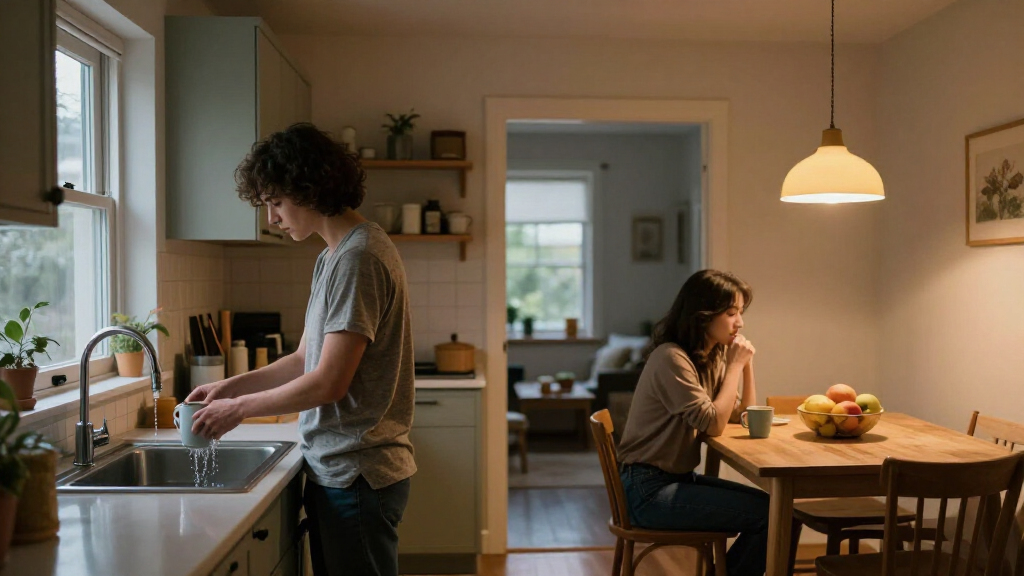
The article describes partners who remain civil and keep up with responsibilities but have little conversation beyond practical matters such as bills, childcare and errands. They may still attend events together and appear fine to others, while feeling that their relationship has become more like a living arrangement than a partnership. The term is informal, not presented as a clinical diagnosis.
Drawing on Gottman’s writing, the institute describes how some couples withdraw from one another to avoid repeated conflict. Their outward calm can conceal a loss of friendship and connection. The source distinguishes this pattern from relationships marked by frequent conflict: in the research it cites, anger during conflict discussions predicted one group of divorces, while another group of couples showed a later pattern of emotional flatness and distance.
The article also highlights rituals of connection: routines both partners enjoy and rely on, such as greeting each other at the end of the day or sharing a meal. It reproduces a 13-item questionnaire from Gottman’s book, covering routines and shared experiences including holidays, weekends, illness, vacations and mornings. In Gottman’s scoring guidance, fewer than three “true” answers suggests the couple’s shared rituals may need improvement. The score is a reflection prompt, not a diagnosis.
Why Everyday Distance Can Matter
The article draws attention to a relationship difficulty that may be easy to overlook precisely because it does not always involve arguments or an obvious crisis. When partners primarily coordinate household tasks, they may miss opportunities for emotional attention and shared enjoyment. The point is not that a quiet relationship is necessarily failing, but that getting along does not by itself show how connected partners feel.
For readers, the distinction offers a way to name a concern without treating a popular phrase as a medical condition. A couple may use the idea to discuss whether their routines include time for conversation, affection and activities they value together. The institute’s proposed rituals are practical examples, not a guarantee that a relationship will improve or a substitute for help when partners need it.
The source also says couples in distant patterns may blame each other for the loss of closeness. That framing matters because it presents disconnection as a pattern between partners rather than proof that one person is solely responsible. The article cites Gottman’s hope that such marriages can experience “a renaissance,” while noting that a couples therapist may help partners move out of the pattern.
As an affiliate, we earn on qualifying purchases.
The Research Behind Parallel Lives
The Gottman Institute is careful to distinguish its existing work from the newer, informal label. It states that it has not studied roommate syndrome specifically. Instead, it applies Gottman’s concept of partners leading parallel lives: sharing a home and activities while feeling little emotional connection.
The source cites a 14-year study of 79 couples by Gottman and Robert Levenson. It reports two waves of divorce: an earlier wave, within about seven years, in which anger during conflict discussions predicted divorce, and a later wave around the time the first child turned 14. Couples in the later group were described as less openly emotional, showing little positive emotion and holding back negative emotion in both conflict conversations and discussions of an ordinary day. These findings concern the study described by the source; they do not establish that every distant couple will separate.
The article also includes an account of a woman who told a Gottman workshop that she and her husband loved each other but felt like roommates. Gottman’s explanation was that they lacked shared meaning—an inner life built through shared symbols, routines and rituals. The example illustrates the idea; it is not a separate clinical finding about all couples who use the term.
““These marriages can have a renaissance.””
— The Gottman Institute, describing John Gottman’s view of distant marriages
As an affiliate, we earn on qualifying purchases.
Limits of the Roommate Label
Roommate syndrome is an everyday expression, and the article does not establish it as a formal diagnosis or a condition with agreed clinical criteria. The Gottman Institute explicitly says it has not researched the label itself. Its connection to parallel lives is an interpretation through Gottman’s framework, not a finding that the two terms are interchangeable.
The source does not provide enough detail to assess the study’s methods or apply its results to couples generally. Its account also does not establish that emotional distance causes divorce in every case, or that introducing a routine will resolve it. The questionnaire is presented as a way to reflect on shared rituals, not as a validated diagnostic test. Couples’ circumstances, needs and responses to therapy can differ.
As an affiliate, we earn on qualifying purchases.
The article suggests that partners begin by discussing which everyday moments feel connecting and which have become purely logistical. Its questionnaire offers prompts about meals, reunions at day’s end, weekends, celebrations and rest. If partners disagree, Gottman’s guidance is to treat the difference as a chance to create a routine that feels meaningful to both, rather than assuming one person’s preference should prevail.
The source points readers to other Gottman Institute articles about rebuilding closeness, reconnecting through rituals, emotionally unavailable partners and phone use. It also says couples therapy can help partners address patterns of distance. The article’s closing vignette returns to Elena and Sam: they cook together after a period without doing so, and he later asks what she thought of another couple at dinner. Those moments illustrate renewed conversation in the story; they do not establish an outcome for couples generally.
No follow-up study, treatment result or specific next clinical milestone is provided in the source. For now, the practical takeaway is to treat the label as a prompt for conversation, not a diagnosis, and to seek professional support if partners want help addressing persistent disconnection.
As an affiliate, we earn on qualifying purchases.
Key Questions
What does “roommate syndrome” mean?
It is an informal term for a relationship that feels more like a shared living arrangement than a close partnership. Partners may manage responsibilities together while having limited intimacy or conversation beyond practical matters.
Is roommate syndrome a clinical diagnosis?
The source does not present it as one. The Gottman Institute says it has not studied roommate syndrome specifically and uses the term as an everyday description of emotional distance.
Can couples get along and still feel disconnected?
Yes. The article describes couples who avoid frequent fights and cooperate at home but feel emotionally distant. It connects this pattern to Gottman’s concept of leading parallel lives.
What does the Gottman questionnaire measure?
Its 13 statements prompt couples to reflect on whether they share enjoyable routines and traditions, such as meals, weekends and holidays. The source says a score below three suggests room for improvement in shared rituals; it is not a diagnosis.
What can partners try if they feel like roommates?
The article suggests talking about routines both partners would value and creating small rituals of connection, such as a more attentive end-of-day reunion. It also points to couples therapy as a possible source of help; the article does not promise a particular result.
Source: rss
Halloween Picks
halloween
As an affiliate, we earn on qualifying purchases.