


Get gifts for the two of you delivered free with Prime
- Fast, free delivery on millions of items
- Prime Video, Amazon Music and more included
- Member-only deals all year
At a Glance
| Criteria | The 5 Love Languages by Gary Chapman | Attached by Amir Levine and Rachel Heller | Winner |
|---|---|---|---|
| Focus of advice | Emotional expressions and love languages | Attachment theory and relationship patterns | A |
| Practicality of techniques | Simple, actionable love language identification and communication tips | Practical insights into attachment styles and how to manage them | B |
| Scientific grounding | Based on psychological research but simplified for general readers | Grounded in scientific psychological research | Tie |
| Ease of understanding | Highly accessible with straightforward language | Moderately accessible but may require some effort to understand concepts | A |
| Applicability to different relationship types | Most useful for couples seeking to improve emotional connection | Best for those wanting to understand their relationship patterns or attachment issues | B |
| Depth of psychological insight | Moderate — focuses on emotional compatibility | Deep — offers psychological insights with actionable strategies | Depends |
| Reader engagement | Highly engaging with personal anecdotes and quizzes | Engaging through case studies and psychological explanations | A |
| Cost | Affordable, often available in libraries and as e-books | Moderate cost, with options for affordable editions | Depends |
The Seven Principles for Making Marriage Work: A Practical Guide from the Country’s Foremost Relationship Expert

This book stands out for its evidence-based approach and practical advice rooted in extensive research. It offers proven principles to help couples strengthen their bonds and resolve common issues. Compared with other guides, it emphasizes actionable steps and expert insights, making it ideal for couples committed to improving their marriage. However, it doesn’t address every relationship challenge or include recent updates that reflect evolving issues.
The Seven Principles for Making Marriage Work: A Practical Guide from the Country’s Foremost Relationship Expert
- ✔ Author: John Gottman
- ✔ Publication Year: 1999
- ✔ Focus: Marriage and long-term relationships

Act Like a Lady, Think Like a Man, Expanded Edition: What Men Really Think About Love, Relationships, Intimacy, and Commitment
- ✔ Author: Steve Harvey
- ✔ Publication Year: 2012
- ✔ Focus: Men’s thoughts, dating, and relationships
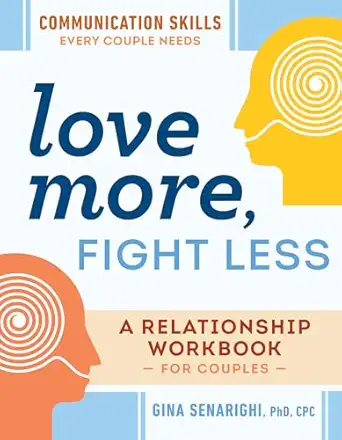
Love More, Fight Less: Communication Skills Every Couple Needs
- ✔ Author: S. J. Scott
- ✔ Publication Year: 2021
- ✔ Focus: Communication and conflict resolution
Pros:
- Offers practical, research-backed principles
- Written by a renowned relationship expert
- Focuses on long-term relationship health
- Provides clear, actionable steps
Cons:
- Lacks recent updates or discussion of newer relationship challenges
- May not cover all areas of relationship issues
- Primarily focused on marriage, less on dating or non-marital partnerships
Best for: Couples seeking a comprehensive, practical guide to strengthen their marriage and build lasting connection.
Not ideal for: Those looking for quick fixes or addressing complex, deep-seated relationship trauma.
Bottom line: A highly practical, expert-backed guide ideal for couples committed to strengthening their marriage through proven principles.
“A highly practical, expert-backed guide ideal for couples committed to strengthening their marriage through proven principles.”
Act Like a Lady, Think Like a Man, Expanded Edition: What Men Really Think About Love, Relationships, Intimacy, and Commitment
This bestseller offers a candid look into men’s thoughts on love and commitment, aiming to help women decode male behavior. Compared with more comprehensive relationship guides, it provides straightforward advice rooted in real-world dating experiences, making it accessible for those seeking to improve romantic understanding. However, it risks oversimplifying complex emotional dynamics and focuses mainly on heterosexual relationships, limiting its applicability for diverse relationship types.
Pros:
- Provides valuable insights into male mindset
- Bestselling and widely recommended
- Updated expanded edition with fresh content
- Practical tips for dating and relationships
Cons:
- May oversimplify emotional complexities
- Advice can seem too general or stereotypical
- Focuses primarily on heterosexual relationships
Best for: Women wanting to understand men’s perspectives and improve romantic communication.
Not ideal for: Those seeking in-depth psychological insights or advice for non-heterosexual relationships.
Bottom line: A useful guide for women seeking to understand men better, but it should be complemented with more nuanced resources for complex relationship issues.
“A useful guide for women seeking to understand men better, but it should be complemented with more nuanced resources for complex relationship issues.”
Love More, Fight Less: Communication Skills Every Couple Needs
This workbook focuses explicitly on enhancing communication skills through practical exercises and guided activities. Compared with theory-heavy relationship books, it offers tangible tools for couples committed to resolving conflicts and fostering understanding. While its hands-on approach is highly effective, it does require active engagement from both partners, which may be challenging for those less motivated or with busy schedules. Its lack of detailed content description makes it less suitable for those seeking theoretical background.
Pros:
- Provides practical communication exercises
- Helps improve understanding and empathy
- Suitable for couples at any stage
- Easy to integrate into daily life
Cons:
- Requires active participation from both partners
- No detailed content overview available
- May be less effective without commitment to exercises
Best for: Couples looking to strengthen their bond through better communication and conflict resolution.
Not ideal for: Singles or couples not prepared to actively participate in exercises.
Bottom line: A highly practical, activity-driven guide perfect for couples dedicated to improving their dialogue and conflict management.
“A highly practical, activity-driven guide perfect for couples dedicated to improving their dialogue and conflict management.”
As an Amazon Associate we earn from qualifying purchases.
Key Differences
The core distinction lies in their approach: The 5 Love Languages simplifies emotional compatibility into five primary ways people give and receive love, making it easy for readers to identify and adapt their behaviors. It is particularly effective for couples looking to improve emotional expression and understanding without delving into complex psychological theories. Attached, however, offers a more scientific perspective, analyzing how attachment styles—secure, anxious, or avoidant—shape relationship dynamics. It provides deeper insight into why certain patterns emerge and how to address them, especially for individuals struggling with trust or fears of abandonment. In practice, The 5 Love Languages tends to be more straightforward and immediately applicable for couples seeking quick improvements in communication, whereas Attached appeals to readers wanting a more detailed understanding of their psychological patterns and long-term relationship health. Both can be valuable, but their utility depends on the reader’s specific needs: emotional expression versus attachment security.Detailed Comparison
Focus of advice (The 5 Love Languages by Gary Chapman wins — moderate)
The 5 Love Languages concentrates on identifying how individuals prefer to express and receive love, offering practical ways to meet each other’s emotional needs. Attached focuses on understanding attachment styles and how these influence relationship behaviors, providing insights into underlying emotional patterns. The choice depends on whether the reader wants to enhance emotional expression or understand their attachment-related behaviors.Practicality of techniques (The 5 Love Languages by Gary Chapman wins — moderate)
The 5 Love Languages offers straightforward, easy-to-implement actions like communicating love in your partner’s preferred language. Attached provides strategies for recognizing and managing attachment behaviors, which may require more reflection and effort but offer deeper change. The practical nature of The 5 Love Languages makes it more appealing for quick wins, while Attached suits those willing to invest in psychological work.Scientific grounding (Attached by Amir Levine and Rachel Heller wins — major)
Attached is rooted in psychological research and attachment theory, providing a scientific foundation. The 5 Love Languages is based on psychological principles but simplifies them for a general audience, making it less rigorous but more accessible.Ease of understanding (The 5 Love Languages by Gary Chapman wins — moderate)
The 5 Love Languages uses simple language, relatable anecdotes, and clear concepts, making it easy for most readers. Attached, while accessible, involves understanding psychological constructs like attachment styles, which may require additional effort.Applicability to different relationship types (The 5 Love Languages by Gary Chapman wins — moderate)
The 5 Love Languages is versatile for couples, singles, and even friends, focusing on emotional expression universally. Attached is particularly relevant for romantic couples, especially those facing attachment-related issues, but less applicable for platonic or non-romantic contexts.Depth of psychological insight (Attached by Amir Levine and Rachel Heller wins — major)
Attached offers deeper psychological analysis of relationship patterns and individual behavior, providing more profound insights. The 5 Love Languages focuses on practical communication strategies without delving into complex psychology.Reader engagement (The 5 Love Languages by Gary Chapman wins — moderate)
The 5 Love Languages uses quizzes, anecdotes, and simple exercises that keep readers engaged and motivated. Attached employs case studies and psychological explanations, which can be engaging but may require more effort to stay interested.Cost (minor difference)
Both books are similarly priced, with options for affordable editions and library access. Cost is generally not a deciding factor.The 5 Love Languages by Gary Chapman: Pros and Cons
Pros:
- Simple, practical advice that is easy to implement immediately
- Focuses on emotional connection, which many couples find rewarding
- Highly engaging with quizzes and relatable stories
- Affordable and widely accessible
Cons:
- Less scientifically rigorous, may oversimplify complex issues
- Does not address underlying psychological patterns or attachment issues
- May not be sufficient for deep relationship problems
Attached by Amir Levine and Rachel Heller: Pros and Cons
Pros:
- Grounded in psychological research and attachment theory
- Provides deeper insights into underlying behavioral patterns
- Suitable for addressing complex or persistent issues
- Offers strategies for long-term change
Cons:
- More complex and potentially difficult to understand
- Requires more effort and reflection to apply effectively
- Less immediately practical for quick fixes or emotional communication
Who Should Choose What
Choose The 5 Love Languages by Gary Chapman if:
- You want quick, practical ways to improve emotional communication with your partner
- You prefer simple, accessible advice without needing a deep psychological background
- Your main goal is to understand and speak your partner’s love language
Choose Attached by Amir Levine and Rachel Heller if:
- You are interested in understanding the underlying patterns affecting your relationship
- You are willing to explore psychological concepts for long-term change
- You face persistent attachment issues or trust problems that require deeper work
Skip both if: You are looking for a comprehensive therapy program or professional counseling rather than self-help books
Value for Money
The 5 Love Languages offers quick, accessible tools and is often more cost-effective for immediate relationship improvement. Attached provides deeper psychological insights that can lead to more lasting change but may involve a steeper learning curve. For most casual readers or couples seeking straightforward communication tips, The 5 Love Languages offers better value. Those dealing with complex attachment or trust issues might find the investment in Attached worthwhile, despite the increased effort and potential cost.Final Verdict
Choose The 5 Love Languages if your primary goal is to improve emotional communication in a straightforward, accessible way. Opt for Attached if you want a scientifically grounded understanding of attachment patterns that can inform long-term relationship strategies. The main deciding factor is whether you seek quick, practical advice or a deeper psychological framework for addressing persistent issues.Frequently Asked Questions
Can I combine both books for better results?
Yes, many readers find value in using The 5 Love Languages for immediate communication improvements while exploring Attached for a deeper understanding of underlying patterns, making them complementary tools.Are these books suitable for singles or only for couples?
Both books are primarily designed for couples, but singles can benefit from understanding love languages or attachment styles to prepare for future relationships.Do I need any background in psychology to understand Attached?
While not necessary, a basic interest in psychological concepts helps. The book is accessible but involves some complex ideas that may require additional reflection.Will these books work for all types of relationships?
The 5 Love Languages is broadly applicable, including friendships and family. Attached is most relevant for romantic relationships but can offer insights into other close bonds.Halloween Picks
halloween
As an affiliate, we earn on qualifying purchases.