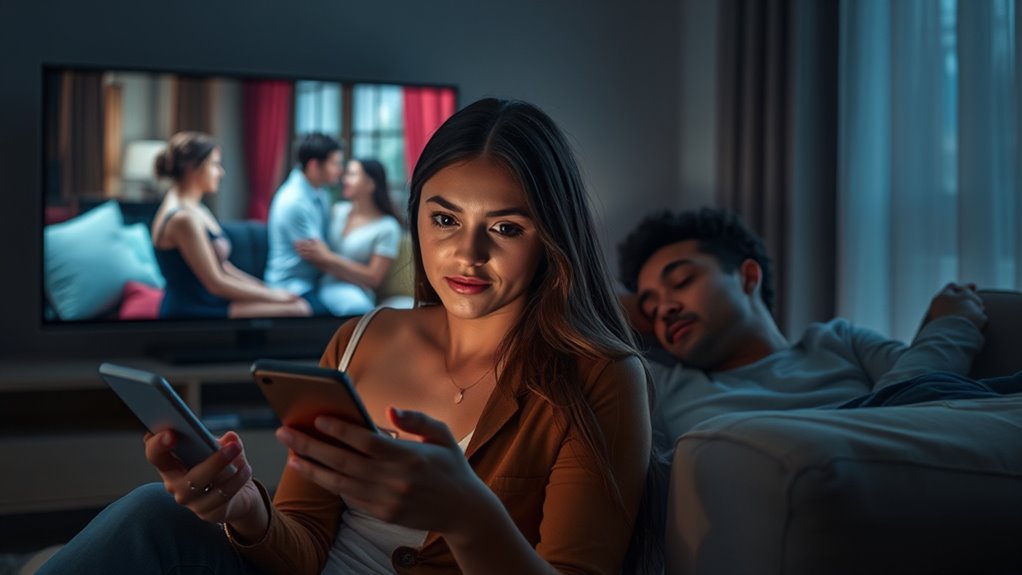

Songs and shows often influence how you see cheating by portraying it as glamorous, justified, or unavoidable. These stories can normalize infidelity and make it seem less serious, which might affect your moral judgments and relationship expectations. When you see characters cheating without consequences or with approval, it can weaken your resolve against similar behaviors. If you keep exploring, you’ll discover how media subtly shapes perceptions and what you can do to maintain a healthy view of trust.

Get gifts for the two of you delivered free with Prime
- Fast, free delivery on millions of items
- Prime Video, Amazon Music and more included
- Member-only deals all year
Key Takeaways
- Media often romanticizes cheating, portraying infidelity as exciting, justified, or without serious consequences.
- Songs and shows frequently depict characters cheating with minimal repercussions, normalizing such behavior.
- Repeated exposure to these portrayals can weaken moral perceptions and influence viewers to view infidelity as acceptable.
- Media stereotypes suggest that crossing relationship boundaries leads to passion, encouraging secret or forbidden love.
- Overall, media’s glamorization and trivialization of cheating can promote attitudes that condone or overlook infidelity.

Media plays a powerful role in shaping attitudes toward cheating, often subtly influencing how individuals perceive academic dishonesty and unethical behavior. When it comes to romantic relationships, the stories we consume in songs, TV shows, and movies often reinforce certain relationship stereotypes that can impact how we view fidelity and betrayal. For example, many popular media portrayals depict infidelity as a common or even acceptable part of relationships, subtly suggesting that cheating is inevitable or understandable in certain circumstances. This can lead you to normalize or dismiss the seriousness of unfaithfulness, especially if these stories romanticize or glamorize such behavior.
Moral portrayals in media also play a significant role in shaping your perceptions. When characters who cheat are shown to face little consequence or are celebrated for their actions, it creates a distorted view of morality. If you frequently see stories where infidelity is portrayed as exciting, justified, or even humorous, it can influence your moral compass, making cheating seem less morally wrong. These portrayals can diminish the perceived severity of cheating by framing it as a harmless or even desirable act, which may weaken your moral resolve when faced with similar temptations in real life.
Furthermore, media often perpetuates stereotypes about relationships that influence your expectations. For instance, the “forbidden love” stereotype romanticizes secret affairs, implying that passion and excitement come from crossing moral boundaries. Such portrayals can make infidelity appear thrilling or inevitable, encouraging you to view cheating as a natural part of complicated relationships rather than a breach of trust. These stereotypes can also create unrealistic expectations about love, suggesting that happiness depends on constant excitement or that breaking moral rules is a way to achieve personal fulfillment.
Additionally, the way media glorifies or trivializes cheating can distort your understanding of its consequences. When shows or songs depict characters cheating without facing serious repercussions, it can lead you to underestimate the damage infidelity causes in real life. You might start to believe that cheating is a minor mistake rather than a betrayal that can deeply hurt partners and break trust.
Another important aspect is how media influences your perception of morality, which can shape your decisions and behaviors in real relationships. By constantly being exposed to these stories, you could develop skewed perceptions about what’s acceptable or normal in relationships, which can impact your own behavior and moral judgments. Recognizing how media shapes these views is the first step toward forming a more honest and ethical understanding of love and fidelity.
Frequently Asked Questions
How Do Different Music Genres Influence Attitudes Toward Cheating?
Different music genres influence your attitudes toward cheating through genre stereotypes and lyrical content. For example, pop songs often promote monogamy, while hip-hop may portray infidelity as glamorous or inevitable. Country music sometimes romanticizes betrayal, shaping your perceptions over time. By listening actively, you can recognize how lyrical themes and genre stereotypes subtly influence your views, making you more aware of the messages you absorb from various musical styles.
Are Certain TV Show Themes More Likely to Promote Infidelity?
Think of TV shows as mirrors reflecting life’s complexities; some themes, like extramarital affairs, can glamorize romantic betrayal. Shows featuring infidelity often normalize such acts, making them seem appealing or acceptable. For example, a popular drama glorifying extramarital affairs might influence viewers to see romantic betrayal as less taboo. So, yes, certain themes in TV shows can subtly promote infidelity, shaping attitudes toward cheating.
Can Media Depictions of Cheating Impact Teenage Behavior?
Media depictions of cheating can influence your teenage behavior, especially when peer pressure and parental influence come into play. If you see cheating glamorized or justified in shows or songs, you might feel inclined to imitate those actions to fit in or gain approval. Your peers and parents shape how you interpret these messages, so it’s important to critically evaluate what you watch and discuss these themes openly to make healthier choices.
What Role Does Social Media Play in Shaping Perceptions of Infidelity?
Social media influences your perception of infidelity by blending privacy concerns with social validation. While it’s easy to think it only exposes secrets, it also shapes your views on what’s acceptable or tempting in relationships. You might feel pressure to seek validation, making cheating seem more normal or justified. Recognizing this helps you stay grounded, understanding that social media’s portrayal isn’t always real and shouldn’t dictate your values or choices.
How Do Cultural Differences Affect Media Influence on Cheating?
Cultural differences considerably shape how media portrayal influences your views on cheating. In some cultures, media may depict infidelity as glamorous or justified, aligning with local cultural norms, which can make cheating seem acceptable. Conversely, other cultures emphasize fidelity, so media portrayal discourages infidelity. Your perception of cheating is deeply affected by these cultural norms reflected in media, guiding your attitudes and behaviors towards relationships.
Conclusion
So, next time you watch those tempting shows or blast catchy songs about forbidden love, remember—they might be subtly shaping your ideas about fidelity. Ironically, media often portrays cheating as exciting or justified, making it seem harmless or even desirable. But in reality, it’s just planting seeds of doubt and temptation. Ultimately, you’re the one choosing what to believe and how to act—so maybe, just maybe, media’s influence isn’t as innocent as it seems.
Columbus Day / Indigenous Peoples' Day Picks
long weekend sales
As an affiliate, we earn on qualifying purchases.