

When cheaters confess publicly on social media, they often seek transparency, social validation, or a sense of control over their mistakes. It provides a way to clear their conscience or demonstrate honesty, even if it risks shame or judgment. Private confessions, however, are usually about protecting relationships and reputations without exposing everything publicly. Understanding these choices reveals underlying motives behind honesty and vulnerability—if you want to explore more, there’s much more beneath the surface.
Key Takeaways
- Public confessions can be driven by a desire for social validation and to demonstrate honesty publicly.
- Private confessions aim to protect reputation and avoid judgment within immediate social circles.
- Public disclosures often serve as performative acts to regain control and accountability.
- Private confessions reflect a preference to handle shame and trust issues discreetly.
- The choice depends on personality, relationship context, and the individual’s motivations for transparency.
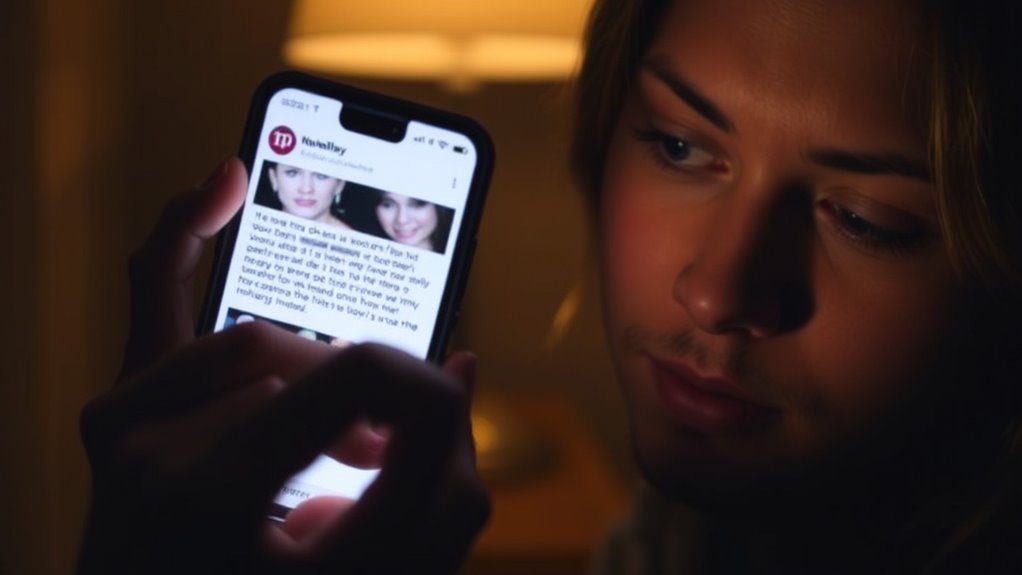
Have you ever wondered why some people choose to confess their cheating publicly on social media, while others keep it private? When someone opts for a public confession, it often stems from underlying trust issues. They might feel betrayed by their partner or themselves, and confessing openly becomes a way to regain some sense of control or accountability. For them, hiding the truth feels impossible, and the act of revealing everything publicly offers a form of relief, even if it’s messy or embarrassing. On social media, the stakes seem lower—they believe that sharing their mistake can help clear their conscience or demonstrate honesty. But beyond that, many seek social validation. They crave the attention, sympathy, or even outrage from their followers, which temporarily boosts their self-esteem. It’s a way to be seen, to be acknowledged for their vulnerability, or to garner support that they might feel they’re lacking elsewhere.
In contrast, keeping a cheating confession private indicates different motivations. Some people prefer to handle their mistakes quietly because they’re concerned about their reputation or the fallout within their immediate circle. They might fear judgment or losing trust from friends and family, so they choose discretion over exposure. Others believe that certain matters are too personal or shameful to broadcast publicly, feeling that some issues are best dealt with behind closed doors. These individuals might also have trust issues that make them hesitant to share their vulnerabilities openly, fearing that their confession could lead to further betrayal or social backlash. Their desire for privacy can be driven by a need to protect their dignity or avoid the chaos that social media exposure can bring. Additionally, they may recognize that public confessions often have fleeting effects and prefer to focus on genuine reconciliation rather than performative honesty.
The choice between public and private confession also reflects how each person perceives accountability. Someone who confesses publicly might see it as a way to force themselves into honesty, hoping that the social consequences will serve as a deterrent in the future. On the other hand, those who confess privately often seek to repair the damage quietly, focusing on rebuilding trust with their partner without external judgment. Ultimately, whether someone chooses to confess publicly or privately depends on their personality, the context of their relationship, and their reasons for seeking social validation or protecting their reputation. Both paths reveal different facets of human vulnerability and the complex ways we navigate shame, honesty, and trust in the digital age.

Stuff I'd Only Tell God: A Guided Journal of Courageous Honesty, Obsessive Truth-Telling, and Beautifully Ruthless Self-Discovery (Creative Self-Care for Women, Men + Teens with Prompts, Lists + More)
As an affiliate, we earn on qualifying purchases.
As an affiliate, we earn on qualifying purchases.
Frequently Asked Questions
Do Social Media Confessions Lead to Legal Consequences?
Yes, social media confessions can lead to legal consequences. When you share private details, you risk privacy concerns and potential legal implications, especially if your confession involves defamation, harassment, or breach of confidentiality. Authorities might use your post as evidence in legal proceedings. So, think twice before confessing online, because what you share could have serious repercussions beyond social judgment, impacting your legal standing and privacy rights.
How Do Friends Typically React to Public Confessions?
You’ll likely see friends react with shock, disappointment, or even anger to public confessions. They might express concern about public shame and judge the cheater’s honesty, questioning their integrity. Peer judgment can be harsh, and some friends may distance themselves, while others might offer support or advice. Your friends’ reactions are often driven by their values and how they perceive public exposure, balancing empathy with their own sense of morality.
Are There Psychological Reasons Behind Public Confessions?
Sure, public confessions are driven by psychological reasons like craving public shame or seeking emotional relief. You might feel overwhelmed by guilt and think, “Hey, why not broadcast my sins to the world?” This act provides a bizarre sense of catharsis, as you believe exposing yourself publicly somehow eases your burden. It’s like trading private guilt for a fleeting spotlight, hoping the shame will finally make you feel free.
What Impact Do Confessions Have on Relationships Post-Disclosure?
When you confess publicly, it profoundly impacts trust dynamics, often making it harder to rebuild trust. The emotional repercussions can linger, causing ongoing insecurity and resentment. Your partner may feel betrayed or humiliated, which can damage the relationship’s foundation. While some couples work through these issues, others find that the public nature of the confession makes healing more difficult, emphasizing the importance of honesty balanced with sensitivity.
Do Confessions Differ Across Social Media Platforms?
Like Icarus flying too close to the sun, confessions on social media vary by platform influence. You notice that on Twitter, audience engagement prompts quick, raw disclosures, while Instagram’s visual focus encourages more curated confessions. Facebook’s broad reach fosters detailed stories, and TikTok’s short-form videos invite spontaneous, emotional admissions. Each platform shapes how and why you confess, reflecting different audience dynamics and influencing the intensity and manner of your disclosures.
Broken Trust: Overcoming an Intimate Betrayal
As an affiliate, we earn on qualifying purchases.
As an affiliate, we earn on qualifying purchases.
Conclusion
Whether you choose to share your story publicly or keep it close to your chest, remember that honesty often whispers louder than silence. Confessing on social media might seem like a bold move, but it’s also a delicate dance between vulnerability and privacy. Sometimes, a quiet acknowledgment can be more powerful than a grand reveal. Ultimately, it’s up to you to decide how to handle your truth—just know that every choice paints a picture of your character.

Trust Me, I'm Lying: Confessions of a Media Manipulator
Used Book in Good Condition
As an affiliate, we earn on qualifying purchases.
As an affiliate, we earn on qualifying purchases.

Emotional Validation: A Guided Journal
As an affiliate, we earn on qualifying purchases.
As an affiliate, we earn on qualifying purchases.