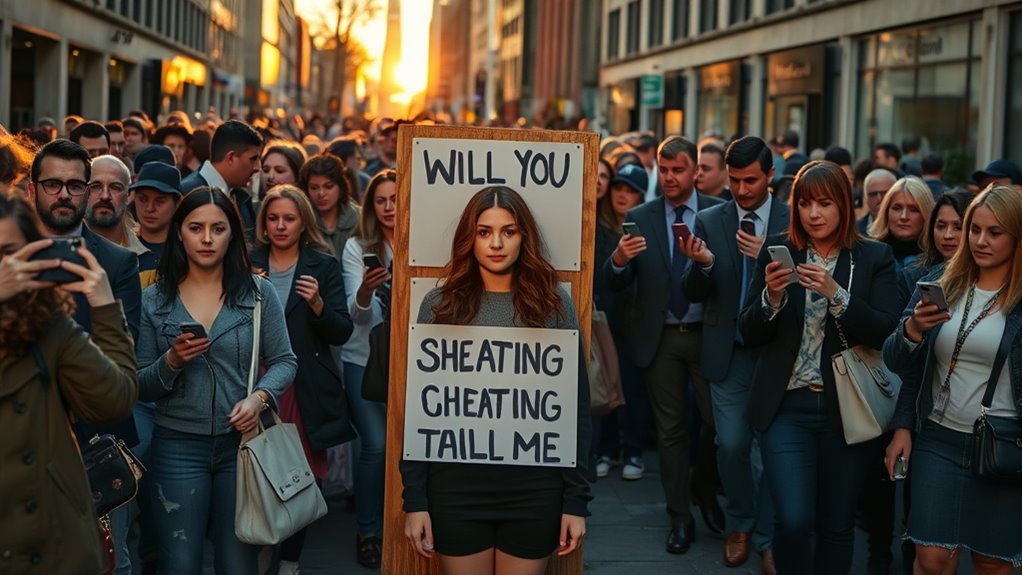

When cheating gets exposed on social media, it often turns into a viral spectacle that can seriously damage reputations and invade privacy. You might see others quick to share stories, which can escalate into harsh comments and public shame. While social media can hold people accountable, it also risks turning private mistakes into public spectacles, causing emotional distress and long-lasting harm. If you’re curious about how to navigate such situations responsibly, there’s more to uncover below.
Key Takeaways
- Public shaming on social media can quickly expose cheating but risks damaging privacy and reputations permanently.
- Viral cheating stories often lead to harsh comments, emotional distress, and social isolation for the accused.
- Sharing private details without consent may cause legal issues and long-term privacy breaches.
- Responsible use of social media balances accountability with respecting dignity and privacy rights.
- Proper channels and thoughtful actions are often more effective than viral spectacle in addressing cheating.

In today’s digital age, social media has become a powerful platform for holding people accountable, but it often crosses the line into public shaming. When someone is caught cheating or acts dishonestly, social media users may quickly share the story to seek justice or warn others. While this might seem like a way to promote social accountability, it can also lead to serious privacy invasion. You might find yourself exposing someone’s personal details or private moments without their consent, which can have long-lasting consequences. This invasion of privacy often happens in the heat of the moment, driven by anger or the desire for retribution, but it can damage reputations beyond repair. Public shaming on social media tends to escalate quickly. Once the story is out, others jump in, adding their opinions, sometimes with harsh comments. It creates a ripple effect where the original incident becomes magnified, sometimes out of proportion. You might think you’re helping to hold someone accountable, but instead, you risk turning a private mistake into a viral spectacle. The line between social accountability and public humiliation blurs, and many people don’t realize how damaging their actions can be. The person being shamed may suffer from emotional distress, loss of employment, or social isolation. In this way, social media’s power can backfire, turning what was meant to be a call for justice into a public lynching. It’s tempting to believe that exposing someone’s misconduct on social media is an effective way to seek justice, but it often ignores the importance of privacy and proportionality. Not everyone handles being publicly shamed well; some may spiral into depression or anxiety. Before sharing or commenting, ask yourself if you’re truly promoting social accountability or just indulging in a form of public spectacle. Remember, everyone makes mistakes, and some errors are better addressed privately or through proper channels. Public shaming can ruin lives permanently, and the damage isn’t always justified by the wrongdoing. The digital crowd’s judgment might feel satisfying in the moment, but it can also perpetuate a cycle of harm and retaliation. Additionally, it’s important to consider that privacy invasion can have legal consequences for those involved in sharing sensitive information. Ultimately, social media gives us a powerful tool for advocacy and accountability, but it also demands responsibility. You have to be mindful of the privacy invasion involved and consider whether your actions are truly serving justice or just fueling a harmful trend. Balance is key—public accountability should never come at the expense of someone’s dignity or well-being. When used thoughtfully, social media can be a force for good, but unchecked, it transforms into a weapon that can destroy lives in the blink of an eye.
![IMBZBK [Auto-Dust Removal] 3 Pack Privacy Screen Protector for iPhone 13 Anti Spy Private Accessories, Case Friendly Film, Military Grade Tempered Glass 3 Camera Lens Protector](https://m.media-amazon.com/images/I/51ZrDxIx-FL._SL500_.jpg)
IMBZBK [Auto-Dust Removal] 3 Pack Privacy Screen Protector for iPhone 13 Anti Spy Private Accessories, Case Friendly Film, Military Grade Tempered Glass 3 Camera Lens Protector
[Auto-Dusting Removal Installation] Includes everything you need with innovative automatic positioning, dust removal, and absorption technology, making the…
As an affiliate, we earn on qualifying purchases.
As an affiliate, we earn on qualifying purchases.
Frequently Asked Questions
How Do Victims Typically Find Their Photos Online?
You often find your photos online because of privacy breaches or online tracking. Social media platforms and apps collect your data, making it easy for others to access or share your images without permission. Sometimes, malicious individuals use online tracking tools or search engines to locate your photos. Staying aware of privacy settings and limiting the sharing of personal images can help you protect your photos from being found or misused.
What Legal Consequences Can Public Shaming Lead To?
Public shaming can lead to serious legal consequences like defamation lawsuits, where you could be sued for damaging someone’s reputation with false or exaggerated claims. It may also result in privacy violations if personal or sensitive information is shared without consent. These actions can cause financial penalties and damage your reputation. Always think twice before sharing or posting content that could harm others, as legal repercussions are real and costly.
How Can Individuals Protect Their Privacy From Viral Shaming?
To safeguard your privacy from viral stories, prioritize privacy protection by adjusting your social media settings to limit public access. Use strong, unique passwords and enable two-factor authentication to maintain online anonymity. Be cautious about sharing personal details and think twice before posting. Consider using pseudonyms or anonymous accounts when discussing sensitive topics. Staying vigilant and proactive helps prevent your private life from becoming public spectacle, shielding you from unwarranted exposure.
Does Social Media Shaming Impact Mental Health Long-Term?
Yes, social media shaming can impact your mental health long-term by causing emotional trauma and social stigma. The intense public scrutiny may lead to anxiety, depression, and feelings of shame that persist even after the incident. You might struggle with self-esteem and trust issues. It is crucial to seek support from friends, family, or mental health professionals to process these effects and rebuild resilience.
Can Public Shaming Influence Real-World Relationships?
It’s no coincidence that public shaming can influence your real-world relationships. When you’re exposed online, your reputation takes a hit, and social accountability becomes heightened. People may judge or distance themselves, impacting trust and connection. You might find your online reputation shaping how others see you in daily life, making it harder to build or maintain healthy relationships. Being mindful of your online actions is vital for preserving genuine connections.

DEFAULT IS EXPOSURE: 12 PRACTICAL TOOLS TO RECLAIM YOUR PRIVACY IN A SURVEILLANCE-DRIVEN WORLD
As an affiliate, we earn on qualifying purchases.
As an affiliate, we earn on qualifying purchases.
Conclusion
As you scroll through social media, remember that public shaming can be a double-edged sword, like a wildfire spreading uncontrollably. While it might seem satisfying to see someone called out, it often leaves lasting scars on both sides. Before you hit “share,” think about the ripple effect your actions can cause. Use your voice wisely—because in the digital world, a single post can either light the way or burn bridges forever.

108 Mindfulness Cards for Coping Skills & Mind Brain Emotional Insight Cards – Somatic Therapy for Stress Relief & Anxiety – CBT, Grounding, Self Care Techniques for Teens | Adults | Therapists
DUAL-ACTION EMOTIONAL WELLNESS SYSTEM: Don't just manage symptoms—understand them. This unique 2-deck bundle offers a complete cycle of…
As an affiliate, we earn on qualifying purchases.
As an affiliate, we earn on qualifying purchases.

Private Chat – Secure & Private Messaging
Google Sign-In – Fast, secure login without extra passwords
As an affiliate, we earn on qualifying purchases.
As an affiliate, we earn on qualifying purchases.