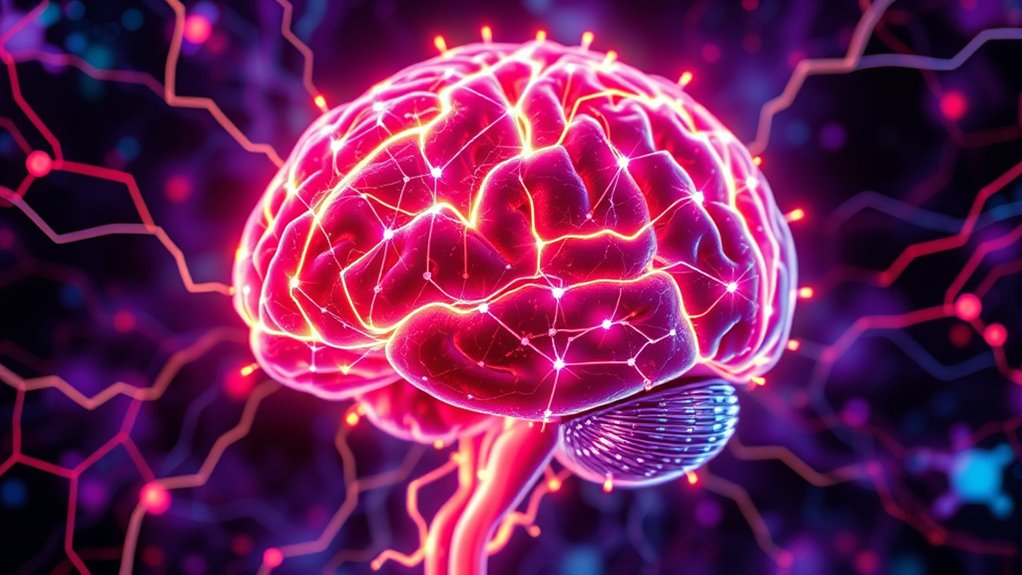

Viewing pornography activates your brain’s reward centers, like the nucleus accumbens and ventral tegmental area, releasing dopamine that makes you feel pleasure and motivates repeated viewing. Over time, these neural pathways strengthen, creating habits similar to addiction. This can alter how you perceive intimacy and satisfaction, leading to tolerance and compulsive behaviors. Understanding these brain processes reveals how easy access and repeated use can impact your mental health — more insights await you.
Key Takeaways
- Pornography activates reward centers like the nucleus accumbens, releasing dopamine and reinforcing pleasurable feelings.
- Repeated exposure strengthens neural pathways, creating habitual consumption similar to addictive behaviors.
- Excessive viewing can alter perceptions of intimacy and diminish satisfaction with real-life relationships.
- Porn hijacks the brain’s reward system, prioritizing immediate gratification over long-term goals and natural rewards.
- Neural adaptations from frequent use can lead to compulsive behaviors, impacting mental health and decision-making.
Have you ever wondered how watching porn might impact your brain? When you explore the neuroscience findings related to pornography consumption, you’ll discover that your brain responds uniquely to these stimuli. Studies show that viewing porn activates areas associated with reward and pleasure, such as the nucleus accumbens and the ventral tegmental area. These regions release dopamine, the chemical linked to feelings of satisfaction and motivation. As you repeatedly watch porn, your brain begins to associate these images with reward, reinforcing the behavior and making it more habitual. This neural reinforcement mirrors how other addictive behaviors develop, highlighting a clear connection between pornography and brain chemistry.
Watching porn activates reward centers in your brain, reinforcing habits through dopamine release and neural reinforcement.
The behavioral impacts tied to these neuroscience findings are significant. For some, frequent exposure can lead to changes in how you perceive intimacy and sexual relationships. You might find yourself craving more explicit or novel material to achieve the same dopamine rush, a phenomenon known as tolerance. Over time, this can alter your normal responses to real-life intimacy, making it harder to feel satisfied without the stimulation of pornography. It can also influence your decision-making processes, possibly leading to compulsive viewing habits that interfere with daily life, work, or relationships. These behavioral impacts aren’t just psychological—they’re rooted in tangible changes in brain function.
Understanding the neuroscience behind porn’s effects makes it clearer why some individuals struggle with compulsivity. The brain’s reward system gets hijacked, prioritizing the quick gratification from pornography over other healthy activities. This can cause you to develop a bias toward immediate pleasure, reducing your motivation for long-term goals or real-world connections. Additionally, some research suggests that excessive consumption may diminish sensitivity to natural rewards, like social interactions or physical intimacy, further reinforcing problematic patterns. Recognizing these mechanisms is especially important in the context of remote and online environments, where easy access to such content can amplify these effects.
While not everyone experiences these effects to the same degree, recognizing the link between neuroscience findings and behavioral impacts equips you with a better understanding of how porn can shape your brain’s wiring. It underscores the importance of moderation and awareness, especially if you notice changes in your emotional or behavioral responses. The brain’s plasticity means you can potentially reverse some of these effects through conscious effort and healthy habits. Ultimately, being informed about the neuroscience behind porn’s impact helps you make more mindful choices about your consumption habits and their potential influence on your mental health and relationships.

Brain Jump – Brain training and education for kids with Ned the Neuron. Games focus on cognitive skills including memory, attention, and concentration.
** Full Version Features **
As an affiliate, we earn on qualifying purchases.
As an affiliate, we earn on qualifying purchases.
Frequently Asked Questions
Can Porn Addiction Cause Permanent Brain Damage?
Porn addiction doesn’t cause permanent brain damage, but it can impact your neuroplasticity potential through behavioral conditioning. Repeated exposure rewires neural pathways, reinforcing habits and making it harder to break free. While these changes are often reversible with time and effort, prolonged addiction may create deep-seated patterns. Staying aware of your behaviors and seeking help can restore balance, leveraging your brain’s natural ability to adapt and recover.
How Does Porn Alter Neural Pathways Over Time?
As you watch more porn, your brain’s neural pathways change, especially in the reward circuitry. This process, driven by neural plasticity, makes certain stimuli more appealing and reinforces specific behaviors. Over time, these alterations can distort your natural response to intimacy, intensifying cravings and making it harder to break free. Essentially, your brain rewires itself, creating a new normal that’s shaped by your ongoing exposure.
Is There a Genetic Predisposition to Porn Addiction?
Yes, genetic factors can influence your predisposition risk to porn addiction. If your family has a history of addictive behaviors, you might be more vulnerable. While genetics aren’t the sole cause, they can shape how your brain responds to stimuli and reinforce compulsive habits. Recognizing this predisposition helps you understand your behavior better and seek effective strategies to manage or prevent addiction.
What Are the Long-Term Cognitive Effects of Frequent Porn Use?
Frequent porn use can drastically diminish your neural plasticity and weaken your cognitive resilience over time. You might find your ability to focus and think critically erodes, as your brain rewires itself around these stimuli. This relentless exposure can lead to diminished memory, reduced problem-solving skills, and emotional numbness. If you’re not careful, your brain’s capacity to adapt and recover could shrink, trapping you in a cycle of mental decline.
How Does Porn Influence Dopamine Regulation in the Brain?
When you watch porn frequently, it boosts your dopamine levels, activating your reward system. Over time, this can cause a neurochemical imbalance, making it harder for your brain to regulate dopamine naturally. As a result, you might seek more intense stimuli to achieve the same pleasure, which can lead to dependence. Your brain adjusts to these heightened dopamine levels, affecting your motivation, mood, and overall reward processing.

Dopamine Brain Nutritional Supplement – Dopamine &Magnesium Complex Formula for Concentration Support, Morning Mental Drive & Focus – Allergen-Free Mental Clarity Supplement, Professional Packaging
Dopamine Support Formula – Targets healthy dopamine levels to enhance focus, motivation, and mood.
As an affiliate, we earn on qualifying purchases.
As an affiliate, we earn on qualifying purchases.
Conclusion
Understanding how porn impacts your brain reveals a powerful truth—you hold the key to your own mental landscape. Just like a sculptor shapes clay, your choices carve your neural pathways. So, you decide whether to build a fortress of healthy habits or leave doors open to potential harm. Remember, your brain’s plasticity is both a gift and a responsibility—choose wisely, for in your hands lies the power to craft a healthier, more resilient mind.

The Mindfulness Workbook for Addiction: A Guide to Coping with the Grief, Stress, and Anger That Trigger Addictive Behaviors
As an affiliate, we earn on qualifying purchases.
As an affiliate, we earn on qualifying purchases.

399 Games, Puzzles & Trivia Challenges Specially Designed to Keep Your Brain Young.
People who solve word games & brainteasers hold significant cognitive advantage over those who donaTMt
As an affiliate, we earn on qualifying purchases.
As an affiliate, we earn on qualifying purchases.