
To maintain intimacy during military deployments, stay proactive in communicating through texts, emails, and video calls, being flexible to accommodate time zones and schedules. Build emotional resilience by practicing self-care and focusing on shared goals. Create routines like virtual movie nights or sending care packages to reinforce your bond. Be open about your feelings and trust each other completely. If you want to discover more effective strategies, you’ll find helpful insights to strengthen your connection during challenging times.
Key Takeaways
- Maintain regular, flexible communication through texts, calls, or video chats to strengthen emotional bonds despite time zone challenges.
- Create shared rituals like virtual dates or sending care packages to foster intimacy and routine.
- Practice honesty and openness about feelings to build trust and validate emotions during separation.
- Focus on personal self-care and emotional resilience to handle emotional ups and downs effectively.
- Support each other’s well-being and remember the temporary nature of deployment to sustain hope and connection.
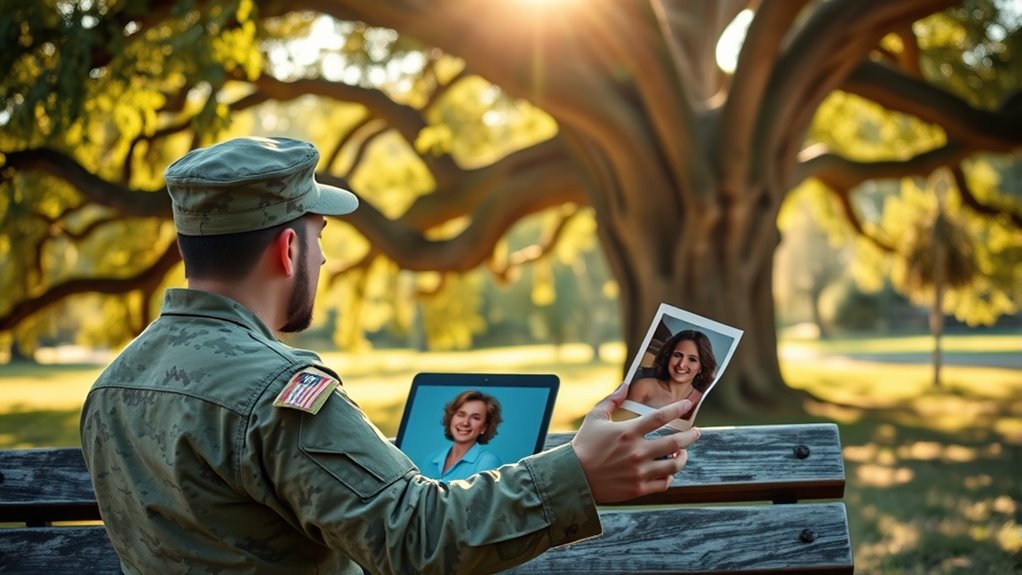
Being apart during a military deployment can be incredibly challenging, but it’s possible to maintain strong relationships and emotional well-being despite the distance. One of the biggest hurdles you’ll face is communication challenges. Time zones, limited connectivity, and unpredictable schedules can make staying connected feel like a constant struggle. To overcome this, you need to be proactive and creative. Schedule regular check-ins, whether through texts, emails, or video calls, and be flexible when timing doesn’t align perfectly. Setting expectations about communication frequency helps reduce frustration and guarantees both of you feel connected. Remember, even brief messages can provide reassurance and reinforce your bond, so don’t underestimate the power of small gestures.
Stay proactive with regular, flexible check-ins to strengthen your bond during deployment.
In addition to managing communication challenges, building emotional resilience is essential for both partners. Emotional resilience allows you to handle the emotional ups and downs that come with separation. It involves staying grounded, maintaining a positive outlook, and practicing self-care. During tough moments, remind yourself why you’re enduring this distance and focus on your long-term goals together. Engaging in activities you love, staying physically active, and seeking support from friends or support groups can strengthen your mental health. Cultivating emotional resilience also means being patient and understanding with each other’s feelings. Recognize that both of you are navigating complex emotions, and offering empathy can deepen your connection despite the physical gap. Additionally, exploring home entertainment options like shared movie nights or virtual gaming sessions can help bridge the distance and create shared experiences.
Sharing your feelings openly is another essential aspect of surviving the deployment’s emotional strain. Be honest about your fears, hopes, and frustrations, and encourage your partner to do the same. This honesty fosters trust and helps you both feel less isolated in your experiences. It’s important to acknowledge that emotions may fluctuate, and that’s okay. Validation and reassurance are key to maintaining intimacy and emotional closeness. You might also consider creating shared rituals, like a weekly video date or sending care packages, to reinforce your bond and create a sense of normalcy.
Ultimately, surviving distance during a military deployment depends on your ability to adapt and nurture your relationship actively. By addressing communication challenges head-on and strengthening your emotional resilience, you can turn the difficulties of separation into opportunities for growth. Keep focus on your shared goals, support each other’s well-being, and remember that your commitment can withstand even the toughest circumstances. The distance may be temporary, but your love and resilience can carry you through until you’re reunited.
Frequently Asked Questions
How Can I Maintain Trust During Long Deployments?
You can maintain trust during long deployments by practicing honest communication strategies and setting clear expectations. Regularly share your feelings and experiences to stay emotionally connected. Stay committed to open dialogue, even when faced with challenges, to build emotional resilience. Trust grows when you both prioritize transparency and support each other’s needs, making it easier to navigate the distance and strengthen your relationship despite the physical separation.
What Are Effective Ways to Cope With Sudden Deployment Changes?
Suddenly faced with deployment changes, you feel a rush of uncertainty. To cope, lean on your emotional resilience and adapt quickly. Use communication strategies like honest updates and scheduled calls to stay connected. Keep a flexible mindset, and focus on small, manageable steps. This way, you turn unexpected shifts into opportunities to strengthen your bond, maintaining trust and intimacy despite the chaos.
How Do I Support My Partner’s Mental Health Remotely?
You can support your partner’s mental health remotely by encouraging emotional resilience through regular, honest communication. Send thoughtful messages and listen actively to their concerns. Suggest virtual counseling if needed, offering a professional outlet. Be patient and understanding, reassuring them that you’re there for emotional support. Maintain routines and share positive moments to foster connection, helping them feel less isolated and more supported despite the distance.
What Are the Best Ways to Celebrate Special Occasions Apart?
Think of your special occasion as a bridge connecting you two across the miles. You can plan virtual celebrations like video dinners, movie nights, or heartfelt messages to make it memorable. Get creative with surprises, such as sending a personalized gift or a playlist that resonates with your shared memories. These virtual celebrations and creative surprises let you share joy and intimacy, turning distance into a demonstration of your love.
How Can Children Adapt to a Parent’s Deployment?
You can help your children adapt to a parent’s deployment by fostering resilience and supporting their emotional needs. Encourage open conversations about feelings, and reassure them of your love and support. Establish routines to create stability, and involve them in special activities that maintain a sense of normalcy. By actively listening and providing consistent comfort, you help boost their resilience and emotional adaptation, making the progression easier for your kids.
Conclusion
Even across the vast, silent ocean of separation, your love remains a lighthouse guiding each other home. Distance may stretch like an endless desert, but your connection is the oasis that keeps hope alive. Hold onto the memories like treasured seeds, knowing they’ll bloom again when reunited. Through the storms and stillness, your bond endures—proof that even in absence, love’s flame burns brighter, lighting the way back to each other’s arms.